

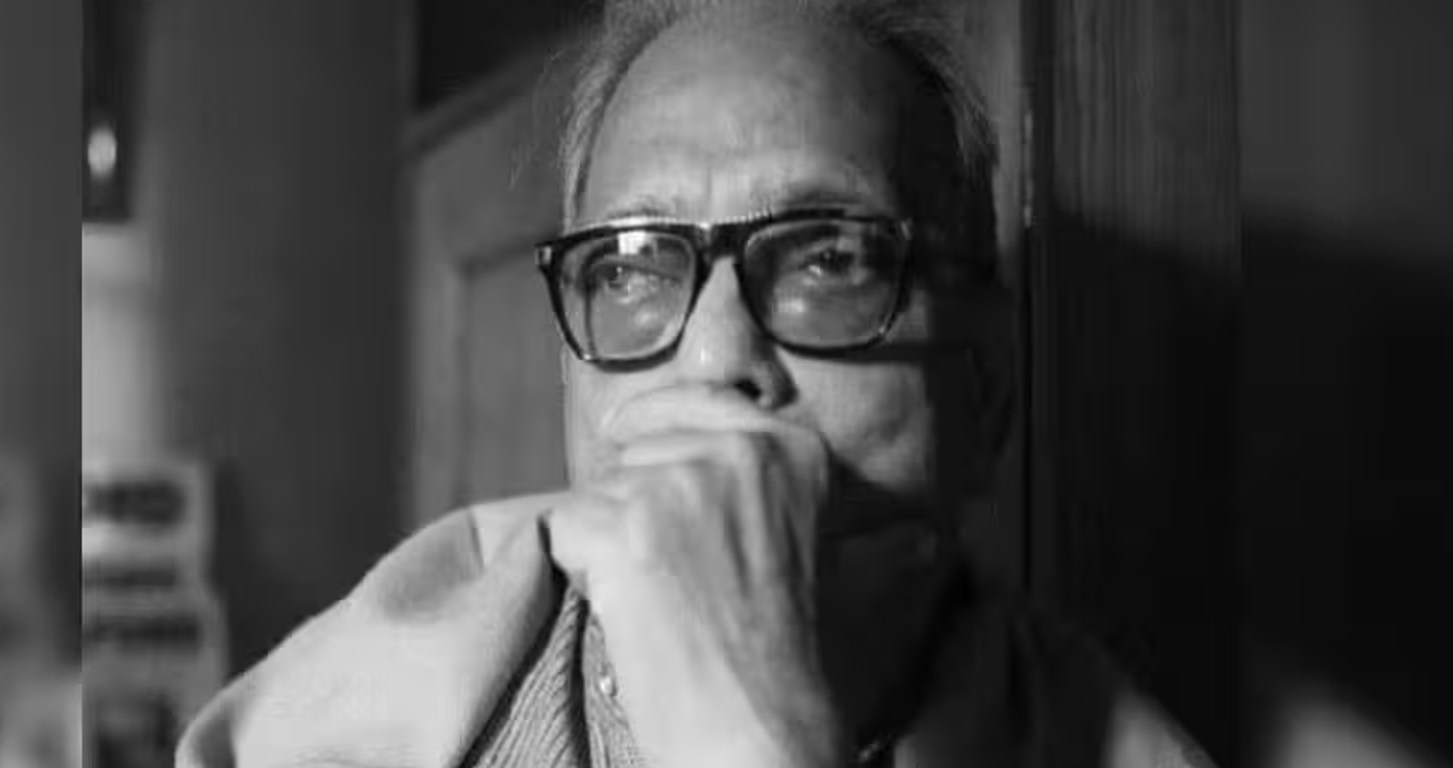
BY RUCHIRA GHOSH
During the summer just gone by, the Indian capital witnessed a quiet but spectacular event. An ace lensman by the name of Nemai Ghosh unveiled to the general public his vast treasure trove of still photographs (in colour) featuring the titan Indian (read Bengali) filmmaker-cum-director Satyajit Ray.
A backgrounder about Nemai Ghosh, who maintained a lifelong association with Ray: he should not be confused with the side actor of Tollywood also named Nemai Ghosh. An entirely self-taught photographer with no formal training, Ghosh made significant contributions to Bengali cinema and theatre. In the 1950s and 1960s, he was involved in Bengali theatre as a member of actor Utpal Dutt’s Little Theatre Group. Throughout his life, he maintained a connection to theatre through stage photography.
Nemai Ghosh took up his second profession only after a chance encounter with Ray. In fact, Ghosh happened to be in Burdwan, West Bengal, where the filmmaker was shooting his first film, Goopy Gyne Bagha Byne (1969), and took some photographs of the set with a second-hand camera. Impressed by these images, Ray asked him to join his team. From then on, he worked as a still photographer on all of Ray’s sets till his last film, Agantuk (1991).
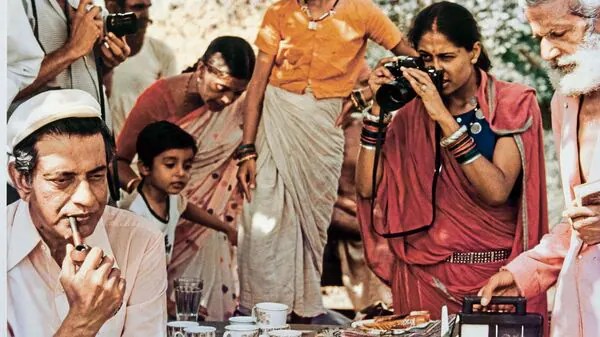
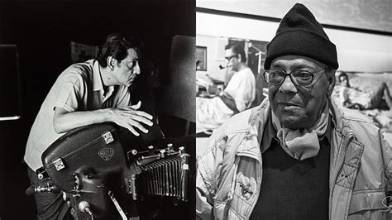
Noted for his black-and-white images shot in natural light, Ghosh did not restrict his craft to still photographs taken during filming; rather, he captured candid moments of the actors and set members in between shots.
Now, back to the recently concluded exhibition. Most of us will agree that B/W photography is a distinct genre and has its own unique charm. However, colour photography also enjoys its pride of place, especially in the modern age. Therefore, it was refreshing to view a voluminous series of coloured images, because Ray was synonymous with black and white.
In the aforementioned exhibition, we see Ray, the master, in myriad moods in each frame; the ambience, interplay of colours, and the background are one of a kind. On a personal note, a couple of photographs show Ray with his wife Bijoya, who, in real life, was technically his Man Friday, deftly handling certain matters—e.g., female hairdos, wardrobe, food, and kitchen-related issues—which she was definitely good at, leaving the master director to handle other tougher things which (sounds cliché?) men are good at.
A good number of the photographs depict Ray in familiar poses, wearing a cloth cap and squinting ruggedly into the camera.
Known for his black-and-white, analogue images shot almost exclusively in natural light, Ghosh did not restrict his craft to still photographs taken during filming; rather, he captured candid moments of the actors and set members in between shots. A few of the images feature Ray with prominent contemporary actresses Sharmila Tagore, Jaya Bhaduri, and Suchitra Sen, among many.
There is an image wherein Ray is shown directing Farooq Sheikh in Shatranj Ke Khiladi.
An interesting photo shows Ray standing in a field of ripening mustard, lost in thought, possibly mulling his next move. Ray lounges in his iconic armchair, surrounded by books, papers, and clippings scattered throughout his study. The stalwart is immersed in his own private world, where he is writing, sketching, reading, and brainstorming.
Summing up, it was a glowing tribute on the part of a passionate lensman to his mentor.

