

BY RITA PANANI
When one thinks of sports in India, cricket, hockey, and kabaddi often come to mind. However, nestled in the annals of India’s sporting history lies a lesser-known but fascinating game: croquet. Once a popular pastime among the British elite and Indian aristocracy, croquet has a rich heritage in India that deserves to be rediscovered and celebrated.
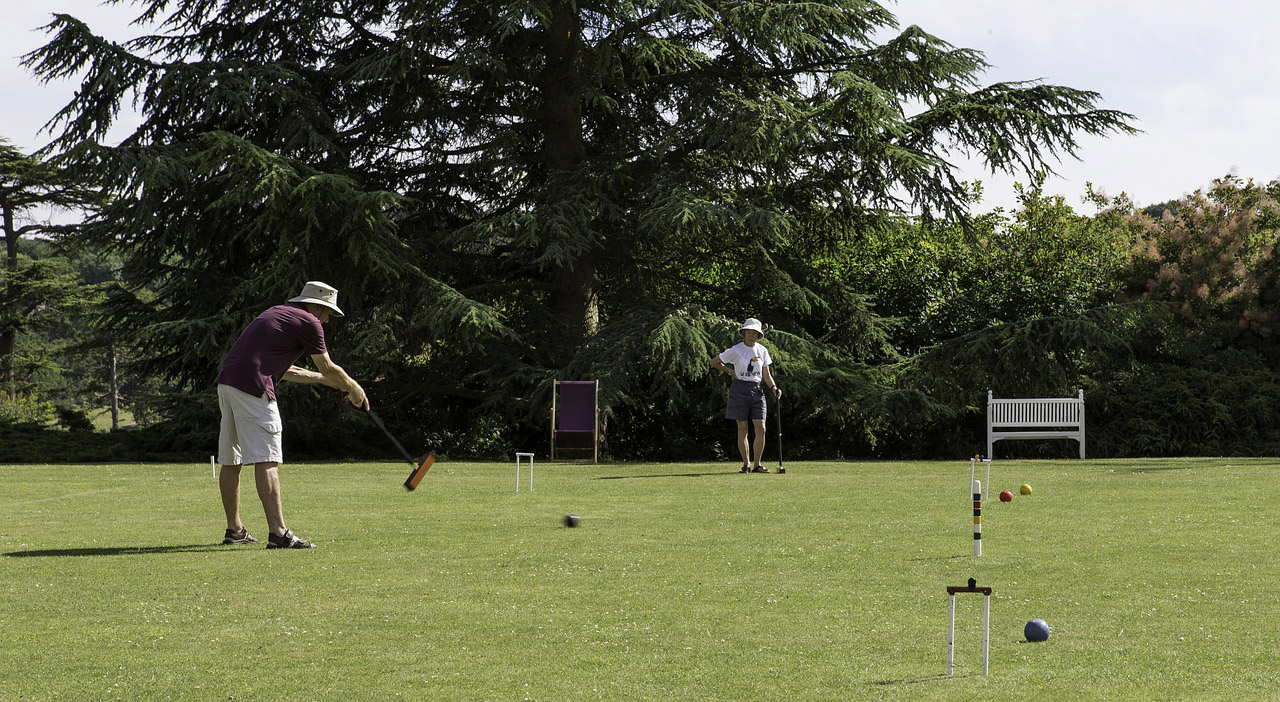
Croquet, a game that involves hitting wooden balls through hoops using mallets, was introduced to India during the British colonial era in the 19th century. The game quickly gained popularity among the British officers and the Indian elite, who were drawn to its blend of strategy, precision, and social interaction. Croquet lawns became a common feature in the gardens of colonial bungalows, clubs, and palaces, serving as venues for leisurely afternoons and high-society gatherings.
The game’s appeal lay in its accessibility. Unlike other sports that required extensive physical exertion, croquet could be enjoyed by people of all ages and skill levels. It was also a social activity, providing an opportunity for the elite to network and showcase their refinement.
The Indian aristocracy, particularly the princely states, embraced croquet with enthusiasm. Maharajas and nawabs, known for their love of luxury and leisure, incorporated croquet into their lavish lifestyles. The game was often played in the sprawling gardens of palaces, accompanied by tea and conversation. For the royals, croquet was not just a sport but a symbol of their cosmopolitan tastes and connection to the British elite.
One of the most famous croquet enthusiasts was Maharaja Sayajirao Gaekwad III of Baroda, who was known for his progressive outlook and love of Western culture. He introduced croquet to his court, and the game became a regular feature of royal entertainment. Similarly, the Nizam of Hyderabad and the Maharaja of Mysore were also patrons of the sport, ensuring its presence in their opulent courts.
Despite its initial popularity, croquet began to decline in India after independence. The departure of the British and the subsequent socio-political changes led to a shift in cultural priorities. The game, associated with colonial elitism, fell out of favor as India embraced more indigenous and mass-oriented sports. Croquet lawns were replaced by cricket pitches and tennis courts, and the game gradually faded into obscurity.
In recent years, there has been a growing interest in reviving India’s croquet heritage. Enthusiasts and historians are working to preserve the game’s legacy and reintroduce it to a new generation. Efforts are being made to restore old croquet lawns and organize tournaments, particularly in cities with a colonial past like Kolkata, Mumbai, and Pune.
One such initiative is the Croquet Association of India, which aims to promote the sport and provide a platform for players to connect and compete. The association has organized workshops and exhibitions, showcasing the game’s history and its potential as a modern sport.
Today, croquet is slowly making a comeback, not as a symbol of elitism but as a sport that combines strategy, skill, and social interaction. Its revival is part of a broader trend of rediscovering and preserving India’s diverse cultural heritage. For many, croquet represents a bygone era of elegance and sophistication, offering a refreshing contrast to the fast-paced, high-energy sports of today.
India’s croquet heritage is a testament to the country’s rich and multifaceted history. While the game may no longer be as prominent as it once was, its legacy lives on in the stories of royal courts, colonial clubs, and leisurely afternoons. By reviving this forgotten sport, India has the opportunity to reconnect with a part of its past and celebrate a game that embodies grace, strategy, and camaraderie.
 COUNTRY SQUIRE INDIA