

BY RUCHIRA GHOSH
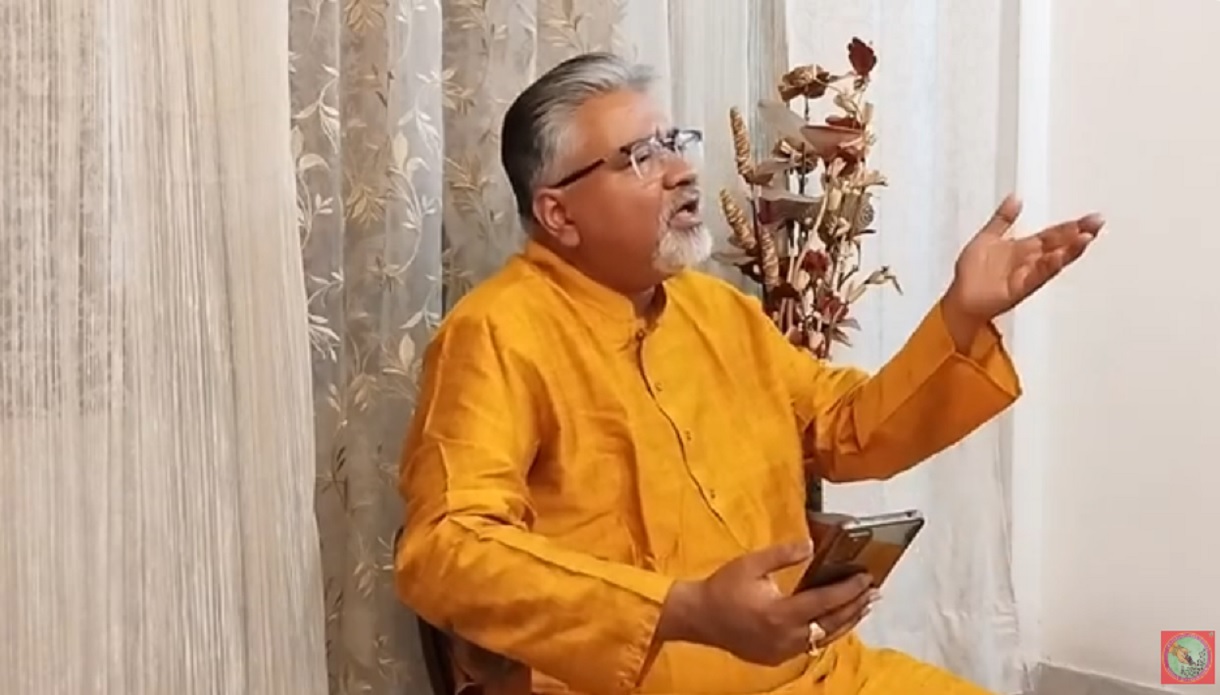
Once upon a time, there was a little boy who was passionate about music; in fact, music ran in his veins. His late father, a flautist, had been a close associate of the legendary Sachin Dev Burman. Throughout his childhood and formative years, this young boy took music seriously. He learned to play the piano and briefly studied the sarod under the maestro Amjad Ali Khan. Later, he switched to the keyboard, immersing himself wholeheartedly in it. In the years that followed, he carved out a career using his favorite instrument, teaching, playing, and composing for various platforms, including All India Radio and Doordarshan. Anirudh Chowdhury fondly recalls his long-time association with the noted musician-composer Kajal Ghosh, who is well-known in Delhi and Bollywood circles. He currently teaches music at Tagore International School in New Delhi, under the leadership of Ms. Mallika Preman.
Fast forward to the present, the past year has been memorable and fruitful for this amiable gentleman. Beginning this year, Chowdhury successfully released “Rabi Smaran,” a series of music videos featuring Hindi Rabindrasangeet, under his private banner, Swaranjali Productions. Two years of dedication and hard work have borne fruit.
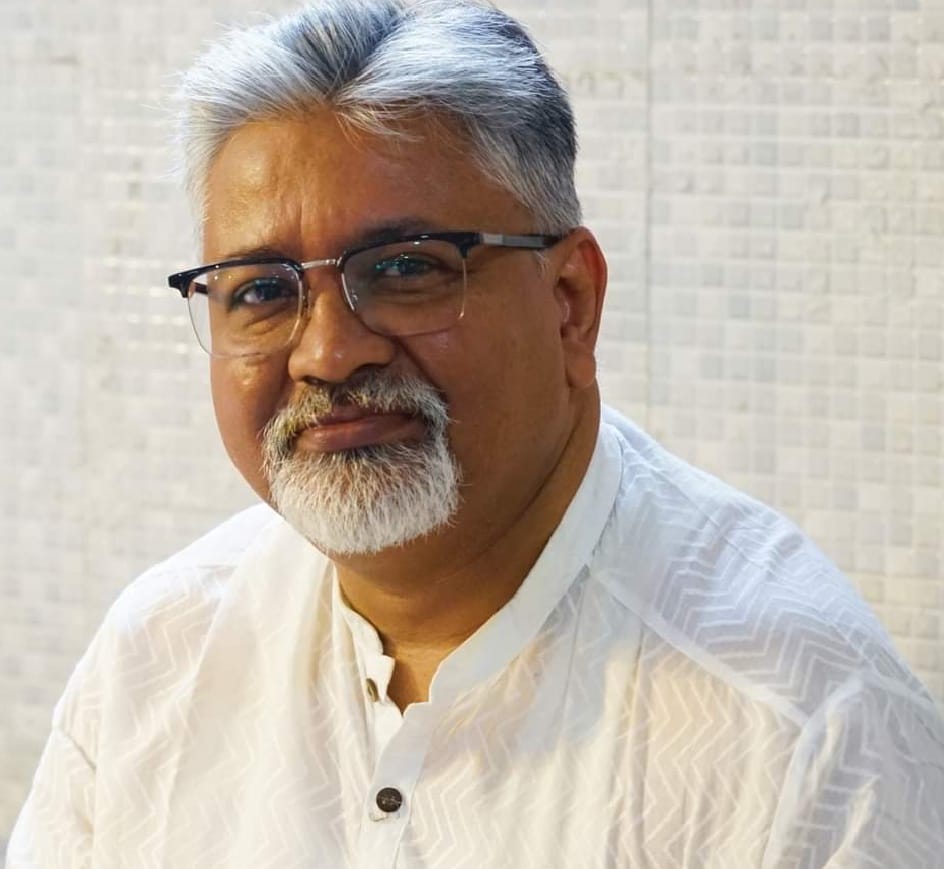
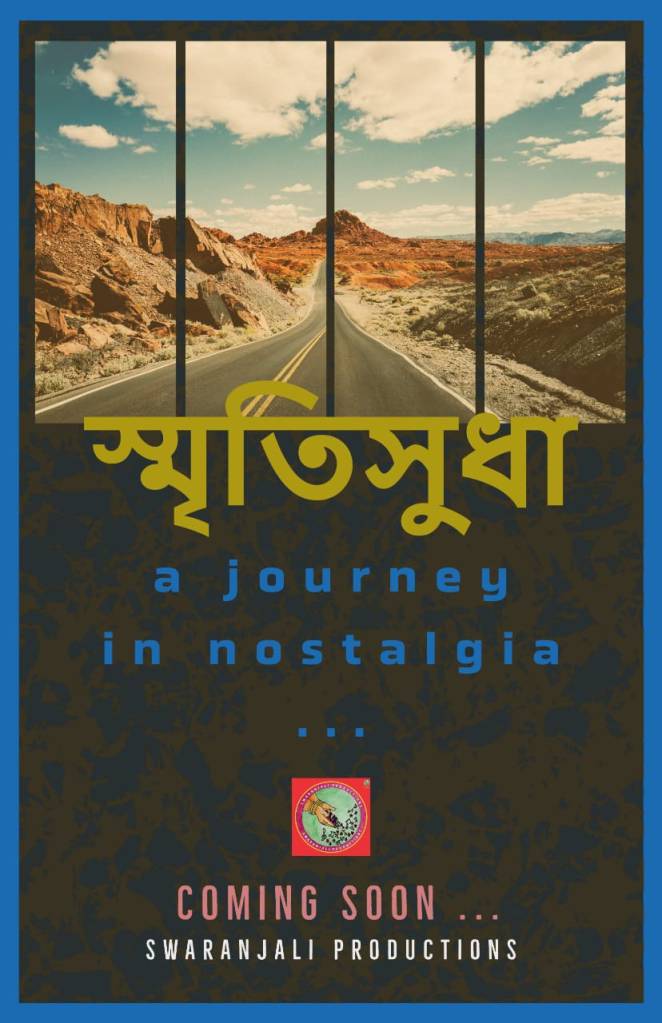
Chowdhury has already amassed many trophies in his career, including “Smriti Sudha,” an anthology of Adhunik (modern contemporary) Bengali songs, and “Nacho Toh Dekhi,” which features a captivating range of popular folk ditties that are gaining popularity.
The Dilliwalah-Bengali Babu divulges that “Rabi Smaran” occupies a special place in his heart. When asked why he chose to present Rabindrasangeet in Hindi, he replies, “Our very existence would be meaningless without Tagore. We Bengalis must gratefully acknowledge that Tagore impacts every aspect of our lives—from providing us our daily bread to instilling confidence in us and offering solace in times of grief; his presence is all-pervading.” After a thoughtful pause, he adds, “Our society and cultural ethos are in a state of flux. More and more people from other states and cultural backgrounds are eager to learn about Tagore. I chose Hindi for my project since it is our national language and accessible to a large audience. I particularly have the younger generation in mind and want to ensure they recognize the significance of Tagore and his invaluable legacy. All I wish for is the cultural upliftment and enrichment of posterity.”
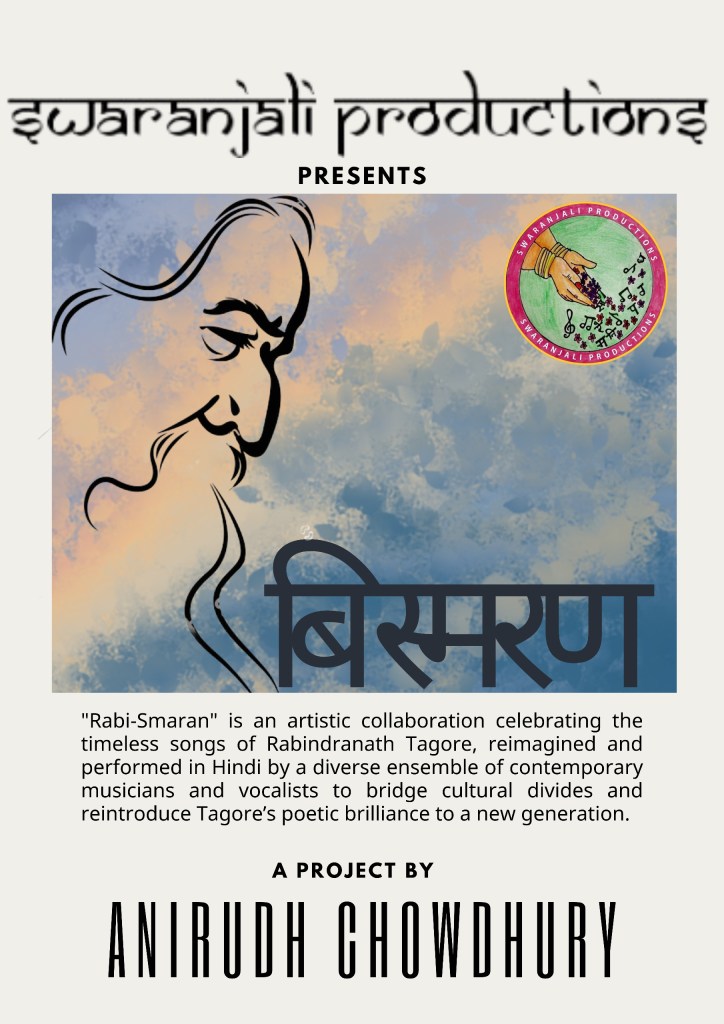
How did “Rabi Smaran” come about? Chowdhury procured Hindi translations of Rabindrasangeet approved and officially published by Viswa Bharati, Tagore’s brainchild and a flourishing Central University. The translations were handled by esteemed scholars like Dr. Jalaj Bhaduri and Daulal Kothari. Next came the selection of artists; Chowdhury managed to engage 32 musical groups (comprising the Bengali diaspora) operating out of Delhi-NCR. Refusing to rest on his laurels, he reached out to prominent singers in Kolkata, Mumbai, as well as Dubai, Singapore, and the USA—countries with significant Indian diasporas. Fortunately, everyone joined in with great enthusiasm.
Financing mega musical projects of this dimension is crucial, and Chowdhury faced no shortage of funds, equipment, space, or logistics. Wholehearted patronage came from cultural institutions, dance-music academies, and philanthropic organizations such as Le Rhythm and Prabhash Kalyan Preeti Trust, to name a few.
Interestingly, all behind-the-scenes activities, including production, were efficiently managed by the Chowdhury family. For instance, graphics editing and visuals were handled by his son, a mass communication and filmmaking professional. His artistic daughter created the logo, while his wife, Barnali, a trained singer, polished the minuscule flaws.
The project encompasses 78 solo and/or duet songs, along with 32 group songs, totaling an impressive 110. Currently, 28 have been released, while the rest are in progress. A quick look at the contents of the soon-to-be-released “Rabi Smaran” includes group songs such as “Alokeri Jhornadharaye,” “Aji Joto Tara,” and “Ami Pothbhola Ek Pothik Eshechi.” Some solos on the list are “Ei Korecho Bhalo” (Rohini Roy Choudhury, Kolkata), “Amar Hridoy” (Rupali Rakshit, Dubai), and “Ektuku Chhwoa Lage” (Sonali Bhattacharya, USA). The latest release, “Tumi Kemon Kore Gaan,” by Debaleena Bhattacharya, was released in late November.
Chowdhury shares his future plans: after Hindi, he intends to focus on Tagore’s lyrics in English, including works like “Auld Lang Syne” (“ano Shei Diner Kotha”) and “With a High Hope” (“Boro Aasha Kore”). When asked if he is satisfied with his achievements and where he sees himself in a few years, the bespectacled gentleman with salt-and-pepper hair and a goatee replies, “I am not sure if I can call it an achievement. The sole purpose of my life has been (and still is) to broaden the horizon of Tagore’s music and reach out to a larger audience. I want to ensure that even when I am no longer here, I will have the satisfaction of knowing that people have not forgotten Tagore; rather, they are able to imbibe his spirit and emotions fully and enjoy them to the fullest.”
Chowdhury’s dedication to preserving and promoting Tagore’s musical legacy serves as an inspiring reminder of the profound impact that art and culture can have on society. His efforts exemplify the importance of keeping traditions alive and ensuring that future generations appreciate the beauty and significance of such timeless works. Through projects like “Rabi Smaran,” he not only celebrates Tagore’s contributions to music but also bridges cultural divides, inviting a broader audience to experience the depth of his artistry. As he looks to the future, Anirudh Chowdhury’s commitment to furthering Tagore’s legacy remains unwavering, carrying forward the rich heritage of Bengali music to new heights and wider audiences.
 COUNTRY SQUIRE INDIA