

BY DR KAUSTAV BHATTACHARYYA
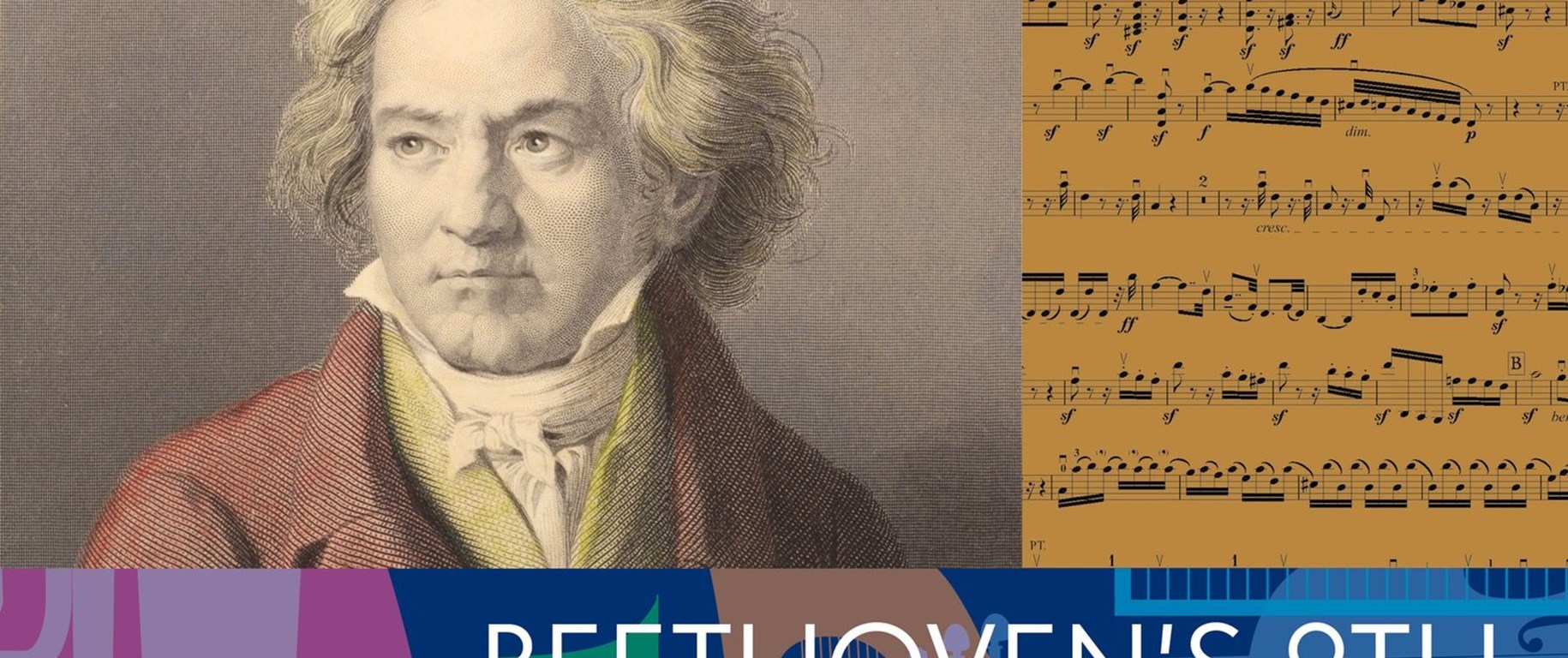
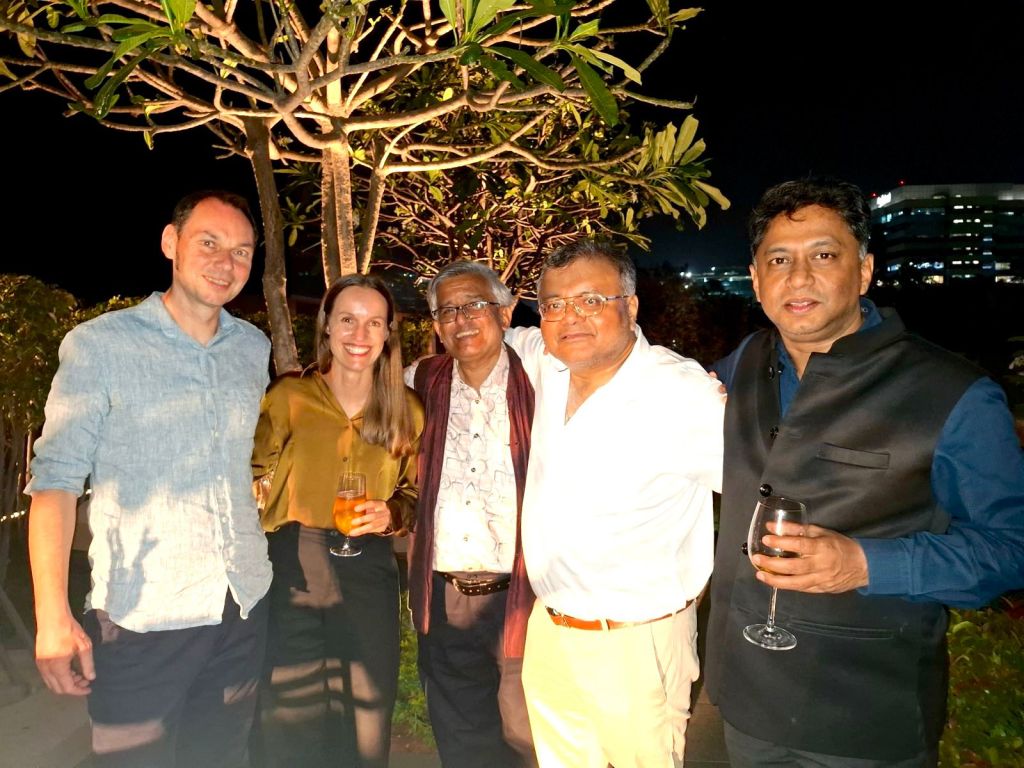
Recently a literary evening was hosted by the Hotel Den located in Whitefield, Bengaluru with the occasion being the bicentennial or 200th Anniversary of Beethoven’s 9th Symphony and made special by the presence of German Professor and academic Dr. Juana Christina von Stein on her debut visit to India. Dr. Juana von Stein was the Guest Speaker on the occasion which was her first literary evening lecture in India. The panel discussion consisted of eminent speakers from Bengaluru, Yumna Hari Singh and Revathy Ashok. The introduction or ‘warm-up to the event was a brief lecture by Dr. Kaustav(Kris) Bhattacharyya and below are the excerpts from that lecture.
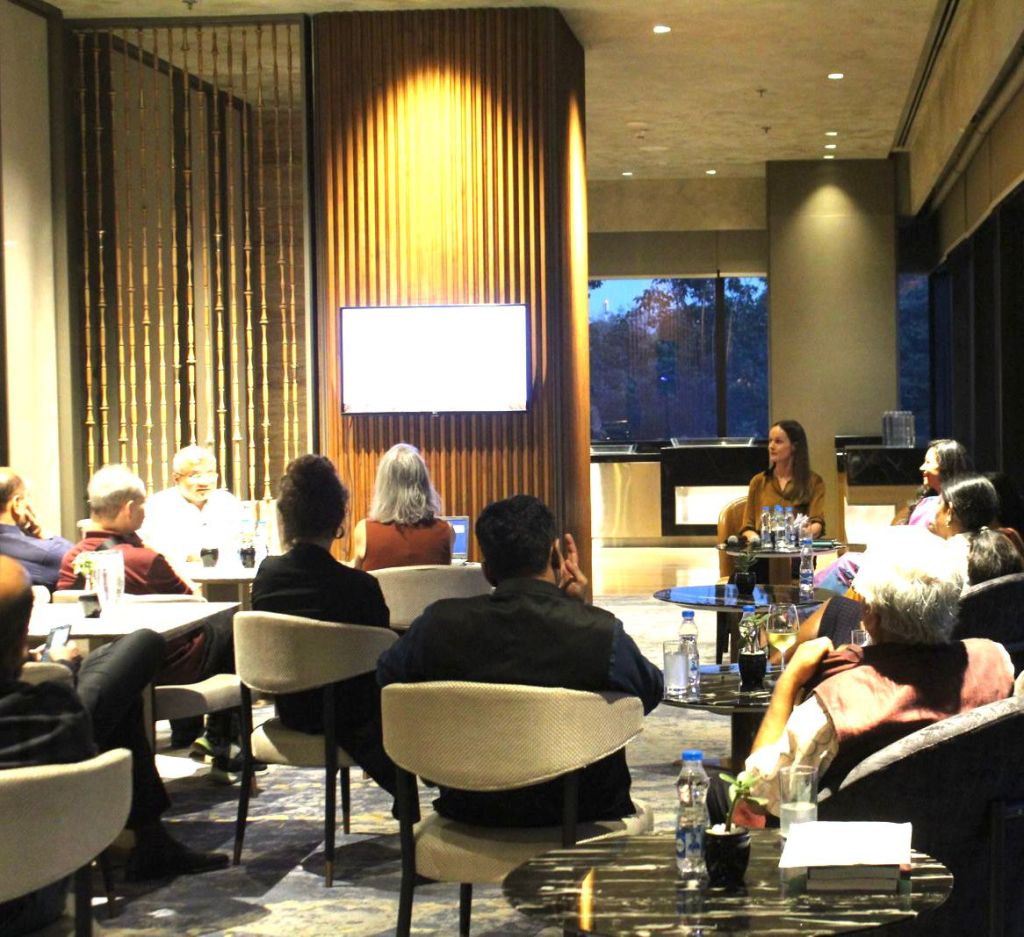
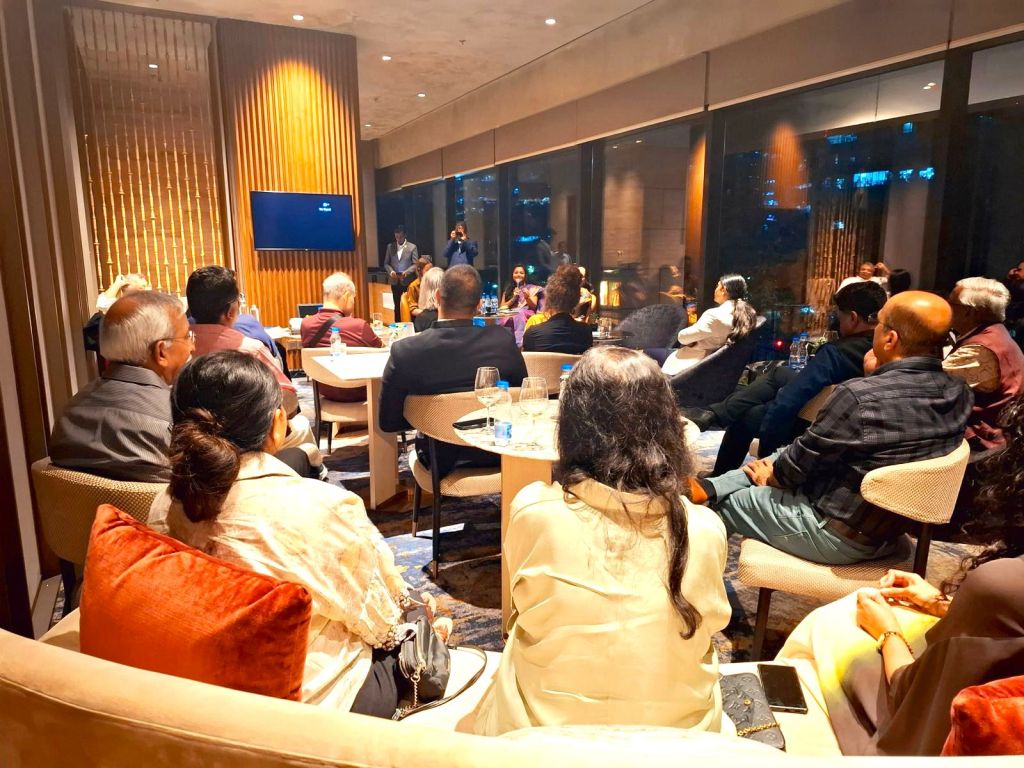


Good Evening!! Namaskara!! Suswagatham!! Guten Abend!! A very warm welcome to you Ladies and Gentlemen to this very Special and Historic Literary Evening at the Hotel Den celebrating the bicentennial or 200th Anniversary of Beethoven’s 9th Symphony.
We will be discussing along with the musical genius Ludwig van Beethoven, the German poet Friedrich Schiller whose poem ‘An die Freude’ inspired the lyrics of the ‘Ode to Joy’, a song which is based on the chorale finale of his 9th Symphony.
We are very fortunate to have with us a distinguished Speaker from Germany Dr. Juana Christina von Stein and an eminent panel of speakers with Yumna Hari Singh and Revathy Ashok. This happens to be the maiden visit of Juana to India and her first literary event presentation and lecture in India.
I wish to assure her that with such a distinguished and delightful audience and an eminent panel it will be a very nice, pleasant and memorable experience!!
Besides I promised some nice Marble Cakes or Marble Kuechen in German which I learnt apparently was Juana’s life’s dream to fly down to India to savour some Indian Marble Cakes and speak about German Literature and Music!!
Now getting serious I am very fortunate that this evening unlike all my previous events I have not prepared a speech nor done my homework since you have such a brilliant speaker who can enlighten you about Beethoven’s 9th Symphony and the German poet Friedrich Schiller better than anyone I know!!
However, I would like to say a few words about what Beethoven’s 9th Symphony and the German poet Schiller, it will be a very personalized reflection and exposition and not theoretical or academic.
In many ways personalized reflections and stories trigger in many of us a process of introspection, recollection of our associations with culture, literature and music.
As the Czech intellectual Vile´m Flusser said “In one, messages flow from a sender toward a receiver, and this is called ‘discourse.’ In the other, messages oscillate between various participants in the process, and this is called ‘dialog.’” As the saying goes, ‘If history were told in the form of stories, it would never be forgotten.’
My tryst with Beethoven’s 9th Symphony in a more emotional rather than intellectual or cognitive manner was in Brussels sometime during 2004 where I was a researcher. This was the year when EU decided to include 10 new members states into their fold, all the 10 were old states of the Soviet Union, a process known as the Enlargement.
Ode to Joy is the official anthem of the EU which is based on the 4th movement of the Beethoven’s 9th Symphony and this was played in the market square or Marktplatz and across different neighbourhoods in Brussels to signify this historic expansion.
For me a layperson as far as Western Classical music is concerned the tune and the words were magical with those blue EU flags and festoons flickering away;
Freude, schöner Götterfunken
Tochter aus Elysium
Wir betreten feuertrunken
Himmlische, dein Heiligtum
Joy, beautiful spark of Divinity,
Daughter of Elysium,
We enter, drunk with fire,
Heavenly one, thy sanctuary!
Deine Zauber binden wieder
Was die Mode streng geteilt;
Thy magic binds again
What custom strictly divided;
Alle Menschen werden Brüder
Wo dein sanfter Flügel weilt.
All people become brothers,
Where thy gentle wing abides.
These words started having a mystical and a magical appeal against the backdrop of this momentous coming together or coalescing of humanity from Western and Eastern part on such a gigantic scale!!
All the broad themes of freedom, peace, universal humanism and solidarity were at play in this Enlargement thus imparting a very special meaning to the Ode to Joy and the Beethoven’s 9th Symphony.
Mind you Beethoven had composed this Symphony when he was nearly deaf and his fellow musicians had to nudge him towards the audience and then witnessed how they were all standing on their feet, doffing their hat and applauding in a highly emotional state.
Now moving on to my tryst with the German Poet Friedrich Schiller; this was as a young 23-year old Indian student who landed in the small town of Wuerzburg to study automotive engineering and yet ended up learning more about German Romanticism and their icons like Heinrich Heine, Goethe, Schiller!! How did that strange phenomenon happen??
The architecture, beautiful natural landscape inspired my love for German Romanticism and Literature apart from the company of my Café intellectual friends studying Humanistik or Germanistik.
Oh well and lets not forget the Beer, Weizen beer and the cheap Sekt or Champagne!!!
Well if I may share the story here; this was my first weekend in Wuerzburg and I was being taken on a tour of the Stadtmitte or the downtown by a flatmate from my WG which is a communal student housing and at some stage he pointed towards an old cafe’ with rugged plain wooden tall windows as the most ‘Bohemian intellectual cafe’ in Wuerburg’ and that was it!! I was on the seventh heaven since I was precisely looking for such a sanctuary of conversation having come of age in the old Bengaluru British Council/Koshy’s world of intellectual cafe’ conversations. I am delighted to have Andrew Lobo and Sridhar ornaments from that world present this evening!!
At this stage to make sense of nostalgic ramblings I would say few words about German Romanticism and specifically the position or contribution of Schiller to the movement.
Romanticism in its very essence celebrates the power of emotions, feelings as opposed to reason and logic and delves into the world of dreams, longings, unconscious and mysterious. Its more about understanding through senses and intuition rather than faculties of reasoning.
One of the finest definitions of Romanticism I encountered and wish to share here is by H. N. Fairchild, in his book The Romantic Quest:
“Romanticism is the endeavor, in the face of growing factual obstacles, to achieve, to retain, or to justify that illusioned view of the universe and of human life which is produced by an imaginative fusion of the familiar and the strange, the known and the unknown, the real and the ideal, the finite and the infinite, the material and the spiritual, the natural and the supernatural.”
One of the most enduring elements which fascinated me is the celebration of Nature in German romanticism where it offers the possibility of transforming mundane realities into something eternal and exalted. It’s through contemplation amidst the natural landscape by the river banks, in forests, mountains and for me revelling in the monsoon rains that the human spirit senses the infinite world. Our interactions with nature prod us to be conscious of the beautiful and greatness of this world.
In German Romanticism, Nature inspired the highest energy and activity of the Spirit and imparted the highest purity and receptiveness of the senses.
German Romanticism laid heavy emphasis on ‘Bildung’ or this special notion of complete education in which attempt is made for the complete development of all innate faculties to attain perfection. It emphasizes to attempt to obtain a totality of human experience.
Friedrich Schiller was a German playwright, poet, philosopher and historian who belonged to the School of German Classicism and shaped the development of German Romanticism and was one of its leading lights!!
His ‘Weltbild’ or world-picture which underlies his entire life and work is the unflinching conviction that the world is governed by a DIVINE Purpose and through which HUMAN BEINGS receive their role and meaning.
His primary concern was the role of Beauty in Human Bildung or education and this connects to my earlier points about Bildung and German Romanticism.
I had earlier posed a question in an article in the Deccan Herald; How can one be beautiful without being moral and ethical? Can we have tradition without a sense of compassion, forgiveness and humanity? This dimension of Schiller’s writings and philosophy struck a deep chord within me; beauty and morality and aesthetics of truth.
Schiller believed in the power of art and beauty to promote personal goodness and freedom; in other words the moral education of Human beings based on the ideals of a Classical Humanitaet(Humanity).
Schiller had an abiding obsession with Human Freedom and for him History is the chronicle of human quest for freedom and thus for true HUMANITAET or HUMANITY.
He defined the GOAL of Humanitaet being:
– Fullness of Human Dignity
– Nobility of the SOUL which Human beings need in their personal, communal and national aspects
This evening on a personal note I am facing an ancient Roman test of scaffolding; in ancient Rome the architect of any building or structure had to stand below the scaffolding prior to the handover and then the scaffolding was removed; if he had done a good job then survives but if the job was shoddy then you know what happens!! Juana decided to start the evening with my very own rendition of the Ode to Joy based on Beethoven’s 9th Symphony which is frightening!! A rather rustic and rugged rendition!!
As I draw my introduction to a close, I wish to cite a few lines from a poem by Schiller, the poem titled ‘Archimedes’; the poem explores the tension between pure knowledge and practical application, arguing that art’s true value lies in its pursuit for its own sake, rather than for material gain.
This theme aligns with Schiller’s broader philosophical views on the importance of aesthetics and the ideal of the artist as a free and independent spirit with the focus on the transformative power of human intellect and creativity.
Nathaniel Hepburn, director, Charleston a heritage site said once “a place where people came to imagine how life might be lived differently.”
Archimedes
To Archimedes once a scholar came,
“Teach me,” he said, “the art that won thy fame;—
The godlike art which gives such boons to toil,
And showers such fruit upon thy native soil;—
The godlike art that girt the town when all
Rome’s vengeance burst in thunder on the wall!”
“Thou call’st art godlike—it is so, in truth,
And was,” replied the master to the youth,
“Ere yet its secrets were applied to use—
Ere yet it served beleaguered Syracuse:—
Ask’st thou from art, but what the art is worth?
The fruit?—for fruit go cultivate the earth.—
He who the goddess would aspire unto,
Must not the goddess as the woman woo!”
Ladies and Gentlemen, Have a Splendid Evening and Thanks a lot for your attention!!
 COUNTRY SQUIRE INDIA
One thought on “Beethoven’s 9th Symphony – Friedrich Schiller The Poet & The Composer”
Comments are closed.