


BY DR KAUSTAV BHATTACHARYYA
LAUNCH OF THE ARCHIVES OF PROFESSOR K.S. KRISHNAN AT THE NCBS ARCHIVES:
I first came across Professor Krishnan’s legacy through writings on science as an instrument for post-Independence nation-building in India. I stumbled upon this very poignant remark by India’s first Prime Minister, Pandit Jawaharlal Nehru, about Professor K.S. Krishnan: “What is remarkable about Krishnan is not that he is a great scientist but something much more. He is a perfect citizen, a whole man with an integrated personality.”
The key presentation at the launch of the archives was conducted by the venerable Dr. Dipankar Vasu Mallik, formerly a professor at the Indian Institute of Astrophysics, Bangalore. Dr. Mallik has a keen and abiding interest in the history of science. He has co-authored the book K.S. Krishnan: His Life and Work with Sabyasachi Chatterjee, based on extensive research on Krishnan’s life and times over several years. Professor Mallik’s professional research has been mainly in the area of interstellar matter and astrophysics of nebulae.

Dr. Mallik was a close personal friend of Vijay Thiruvady, the grandson of K.S. Krishnan, who donated the documents and artifacts for the Archives to NCBS. Vijay had meticulously maintained these materials for over 30 years, as evident from the tour of the Archives later that evening. Around nine months were spent on procuring and setting up the Archives, with around 4,000 letters and 20,000 objects being part of the collection. Interestingly, the Archives contained material in Tamil, as well as English.
This happened to be the 64th Public Lecture of the NCBS Archives.
The presentation was visually striking, with distinct images and documents on the slides. It took us on a tour de force through the life and times of Professor K.S. Krishnan, providing a truly magisterial biographical account. One lovely, quaint photo of Krishnan punting at Cambridge in his formal attire lent a special charm to the launch of the Archives. Personally, I felt that this was very powerful and relevant while launching the Archives, since it related the documents and artifacts to the life-journey of K.S. Krishnan. The Archives became meaningful through this close correlation to the life and times of K.S. Krishnan, and here the letters emerged as being of greatest significance. The letters to Sir C.V. Raman from K.S. Krishnan are very powerful and insightful for understanding his role and the broader evolution and trajectory of modern Indian science.
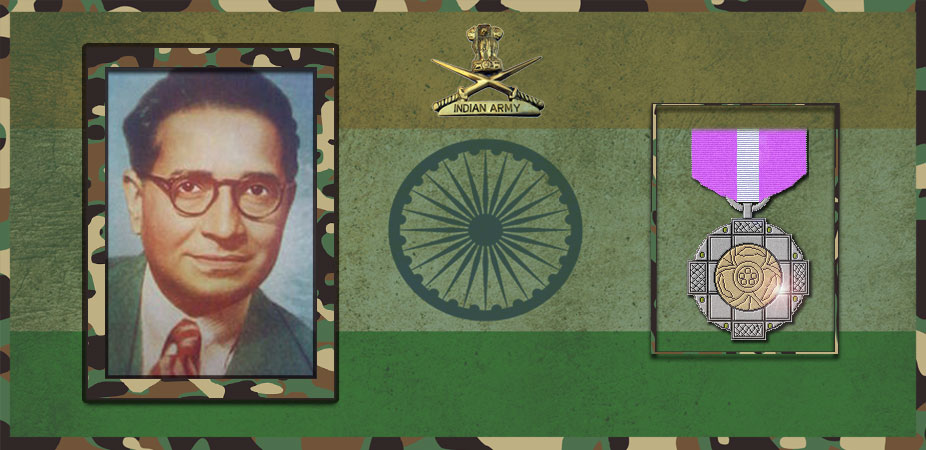
A remarkable gentleman, Professor Krishnan hailed from a small remote village in Tamil Nadu, then Madras Presidency. He attained great heights with his life journey, traversing diverse locations like Kolkata (then Calcutta), Dacca, Allahabad, and New Delhi. In this extraordinary journey, Krishnan held distinguished positions such as Professor, Head of the Physics Department at the University of Allahabad, Mahendra Lal Sircar Professor at IACS (Indian Association of Cultivation of Sciences), and Reader in the Physics Department at Dacca University. At Dacca, he nurtured some very bright students who went on to assume leading academic positions in post-Independence India, like that of Bhagwati Charan Guha and Akshay Bose. With them, he established the first experiment in low-temperature Physics.
His brilliance was demonstrated early on in life during his undergraduate days at the Madras Presidency College. Students sought assistance from Krishnan through tutorial lessons on Mathematics and Physics. Mr. Alexander Moffat, his Physics teacher, spotted his early talent in the sciences of Physics and Mathematics and encouraged him in his academic endeavors.
The most remarkable “takeaway” for me personally was the C.V. Raman testimonial. It affirmed the fact that K.S. Krishnan played a significant role in the discovery of the Scattering effect, for which Raman was awarded the Nobel Prize in Physics. The testimonial mentions that had K.S. Krishnan been engaged or involved in the experiments early in the year 1928, “instead of on the entire work on this Scattering of light done at Calcutta from 1921 onwards,” he would have been a co-recipient for the Nobel Prize along with C.V. Raman. This is a truly incredible fact brought forward by Professor Mallik with plenty of evidential anecdotes and was a highlight of the Archives launch. K.S. Krishnan’s active role in conducting the experiments on Scattering of Light, spearheaded by C.V. Raman, was acknowledged by eminent physicists like Arnold Sommerfeld while visiting India and observing the experimental work by C.V. Raman.
K.S. Krishnan made pathbreaking contributions during his tenure at Dacca University. He concentrated his focus on Magnetism and worked in that field for over a decade. He made significant contributions to Magnetism through Magneto-Chemistry, inviting appreciation from Isidor Isaac Rabi, American Physicist and 1944 Nobel Laureate in Physics. Rabi acknowledged the commendable work on the ingenious and innovative methods developed by Krishnan, remarking that “but nobody else ever saw the thing.”
One of the documents that was fascinating was the DSc Examiners Report, or Bragg’s Report, of the Nobel Laureate Physicist W.H. Bragg. This report recommended the granting of a DSc degree to Krishnan. Professor Bragg was one of the examiners, along with Dr. Stoner and Professor Richardson, examining Krishnan’s thesis titled “Magnetic susceptibilities of crystals in relation to crystal structure.” Professor Bragg remarked in his Report, “We are all agreed that the work which he has done is notable both for its intrinsic value and for its indications of his great abilities and perseverance,” and that both the gentlemen members of the panel were highly impressed.
The second document was a recommendation letter by C.V. Raman for his job application. Raman mentioned “a striking outcome of the fruitful partnership has been the experimental discovery of a new radiation effect.” C.V. Raman compared their partnership to that of Bowen-Millikan at Caltech and defined Krishnan in the laboratory as “an experimenter of rare skill and judgement” and in the library or seminar room as “a mathematical physicist with a penetrating insight.” C.V. Raman applauded his ability to “present a topic to his listeners with utmost lucidity and verve” and finally wrote that Krishnan’s “real place in life is that of a teacher and a researcher in a University.”
Apart from his scientific pursuits, Krishnan had proficient knowledge of Classical Tamil and Sanskrit and wide interests in Philosophy, Literature and History.
At the very end of that evening, I left with the impression of a first-rate Citizen-Scientist, Professor K.S. Krishnan, and a gentleman of understated brilliance. It was truly remarkable how Krishnan impressed his colleagues, seniors, and teachers with his great perseverance, hard work, dedication, and diligence.
 COUNTRY SQUIRE INDIA