

BY RUCHIRA GHOSH
Early winter in Delhi, the National Capital, is always regarded by Delhiwallahs (local inhabitants) as a harbinger of glad tidings. This time was no different. One of the first major events was the Speaking Art Fair, held at the prestigious National School of Drama in central Delhi.
Organized by a Gurugram-based NGO of the same name, the five-day event witnessed a heavy footfall of visitors, including students, aspiring artists, veteran artists, and connoisseurs. Now in its third year, the event is the brainchild of Shri Neeraj Sharma—an accomplished artist and alumnus of the prestigious Government College of Art, Chandigarh—along with his associates who share a deep interest in art and painting.

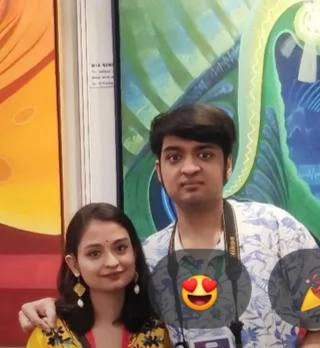
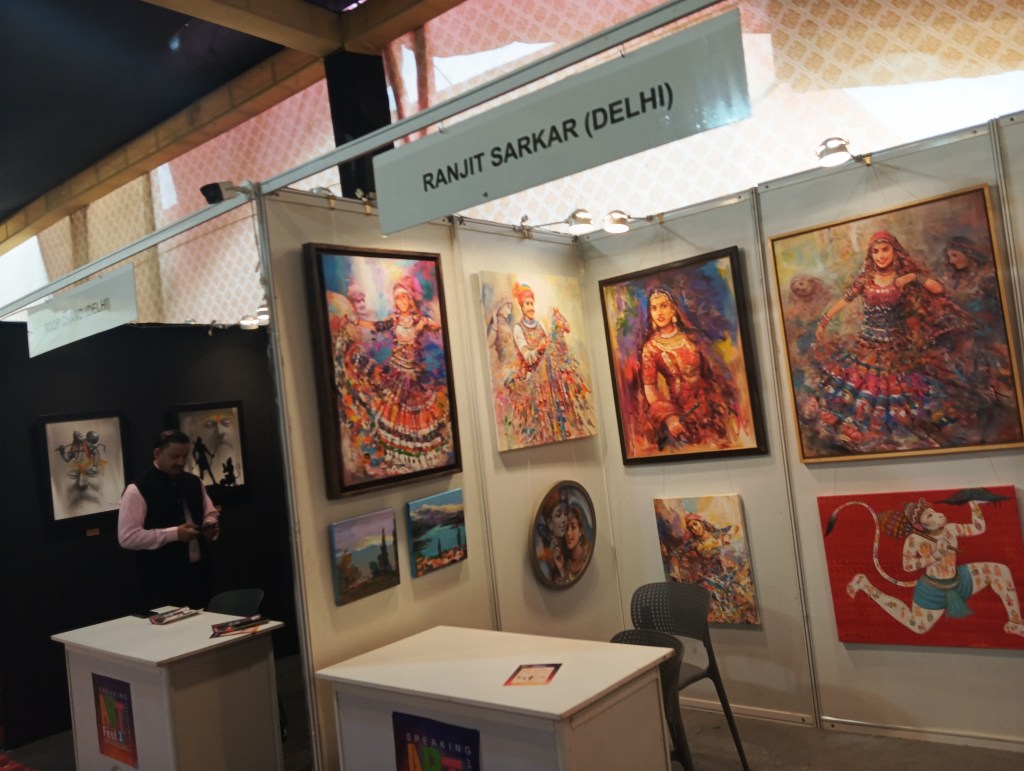


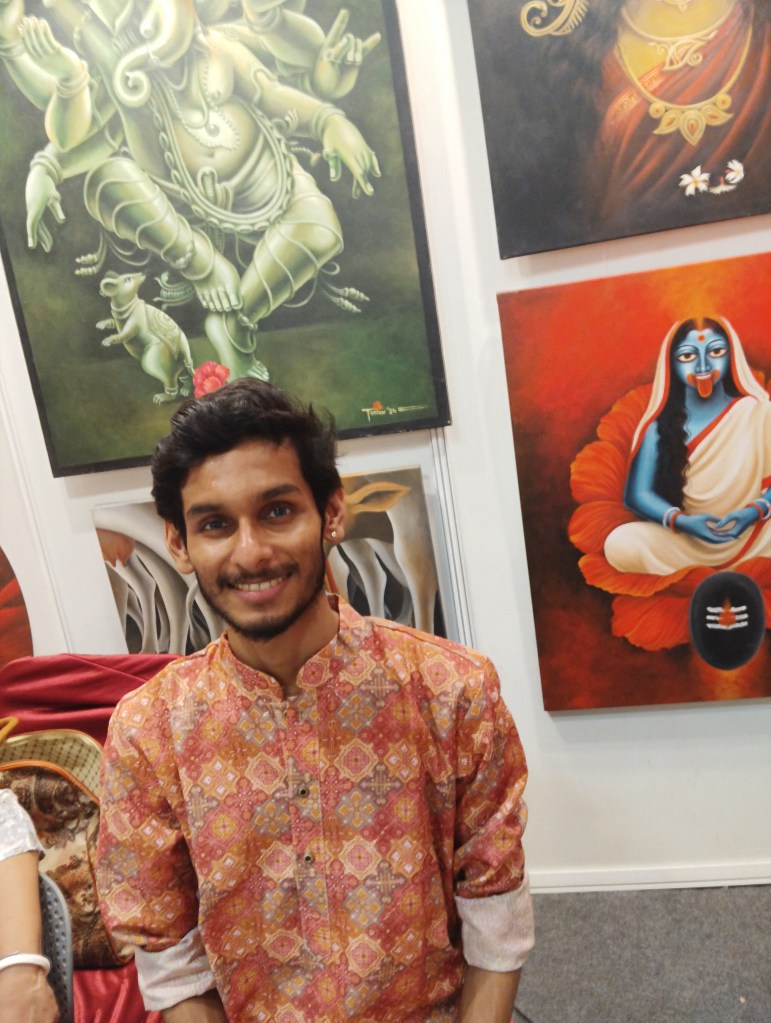


Speaking to this reporter, Sharma said, “The underlying idea is to encourage, promote, and provide financial aid to the innumerable talented art students and aspiring painters who are unable to come into the limelight owing to financial constraints and a lack of adequate exposure.” Sharma founded and currently administers the aptly named Speak Art Foundation, which boasts a wide and well-connected network.
It was evident that most of the participating artists were youthful men and women under forty, with dreams in their eyes, aspiring to carve niches for themselves in the realm of art.
The moment I stepped into the pavilion, I was greeted by a vibrant, flamboyant riot of colours, hues, lights, and shades, all juxtaposed with diverse aspects of visual art. As I moved from one stall to another, I was awestruck by the immense variety of subjects, motifs, themes, images, shapes, sizes, and designs. In fact, I was struck by the sharp contrast from one artwork to another. You name it, and it was there on the numerous canvases lining the stall walls: pets, horses, camels, domestic scenarios, rustic Rajasthani women in traditional attire and jewellery, the smiling faces of children, and more.
Portraits of the serene and reposeful Lord Buddha were plentiful. The paintings depicted him in myriad moods and postures, instantly appealing to visitors. Another popular subject was Ganesha, the jovial Hindu deity characterized by his portly figure and elephantine visage.
While wandering through the pavilion, I chanced upon the cartoon-like presentations of a young lady named Parul Bansal. Her depictions of men and women in an urban corporate environment seemed greatly inspired by the oeuvre of the famous cartoonist Mario Miranda, who was synonymous with the (now defunct) iconic Illustrated Weekly of India.
It was mind-blowing to view the works of Tushar Chanda (an alumnus of Jamia Millia), who is visibly obsessed with the fiery, ferocious, and awe-inspiring goddess Kali. That Kali dominates his psyche is abundantly evident from his works, which portray the Devi in her infinite moods.
Last, but certainly not least, was artist Ria Sinha (a graduate of the Delhi College of Art). Having recently undergone crucial ENT surgery, she has powerfully depicted her deepest fears, anguish, trauma, and a welter of emotions in her paintings.
The Speaking Art event also included a live quiz exploring the entire gamut of art, a discussion on the impact of Artificial Intelligence on visual arts, and, most importantly, an eye care session for all the artists present. This was a splendid idea indeed, since it is the human eye that links the colourful macrocosm of the outside world to the microcosm of the soul and its inner beauty.
 COUNTRY SQUIRE INDIA