

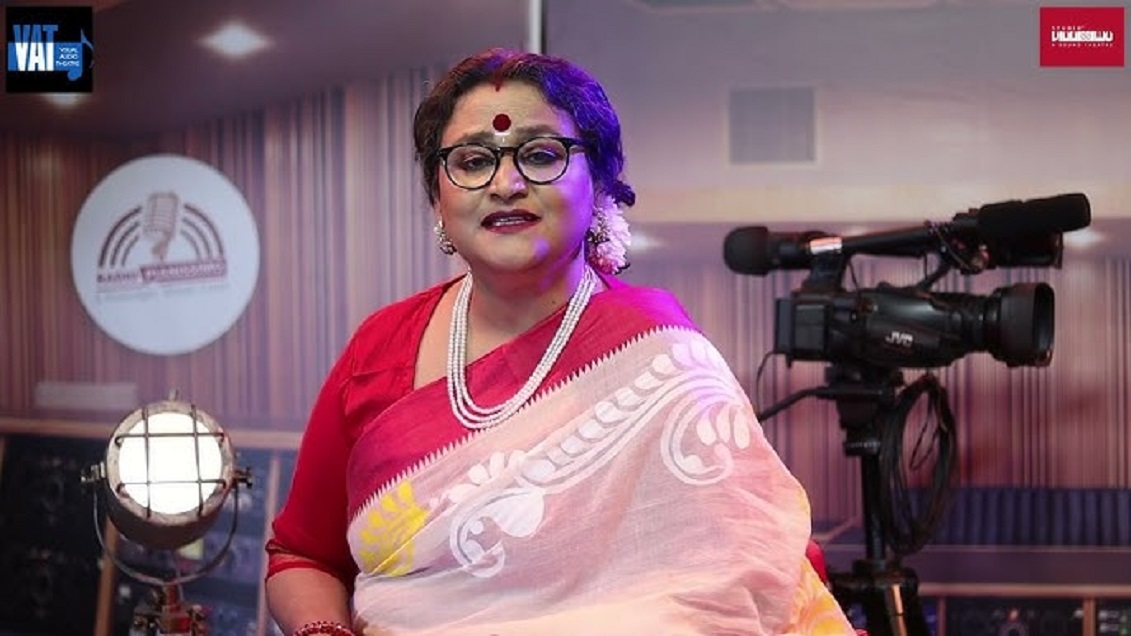
BY RUCHIRA GHOSH
As a member of the vibrant cultural scene in the National Capital, I have had the pleasure of interacting with many highly talented individuals deeply immersed in music. These passionate women share a profound love for vocal music and much in common. All hail from ordinary middle-class backgrounds, with music running in their veins—thanks to parents or close relatives well-trained in the arts. These spirited women remain indebted to their respective gurus, who guided them on their musical journeys. Here is the first profile in the series.
Aparna Lahiri grew up in Santragachi, Howrah—Kolkata’s twin city—in a joint family with four siblings, most of whom had a basic understanding of music. A hyperactive child, Aparna needed only the sound of music to soothe her. She attempted to sing even before she was big enough to play the harmonium, the staple musical accompaniment in average Bengali homes.

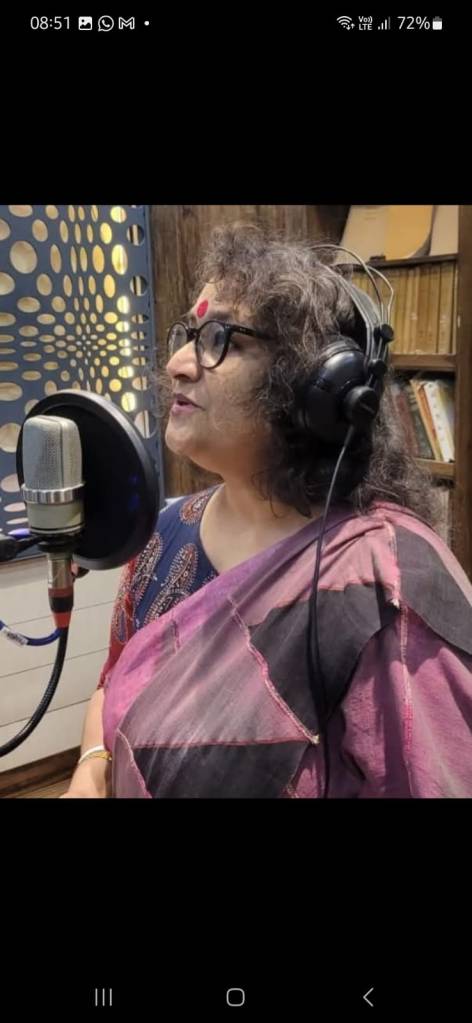

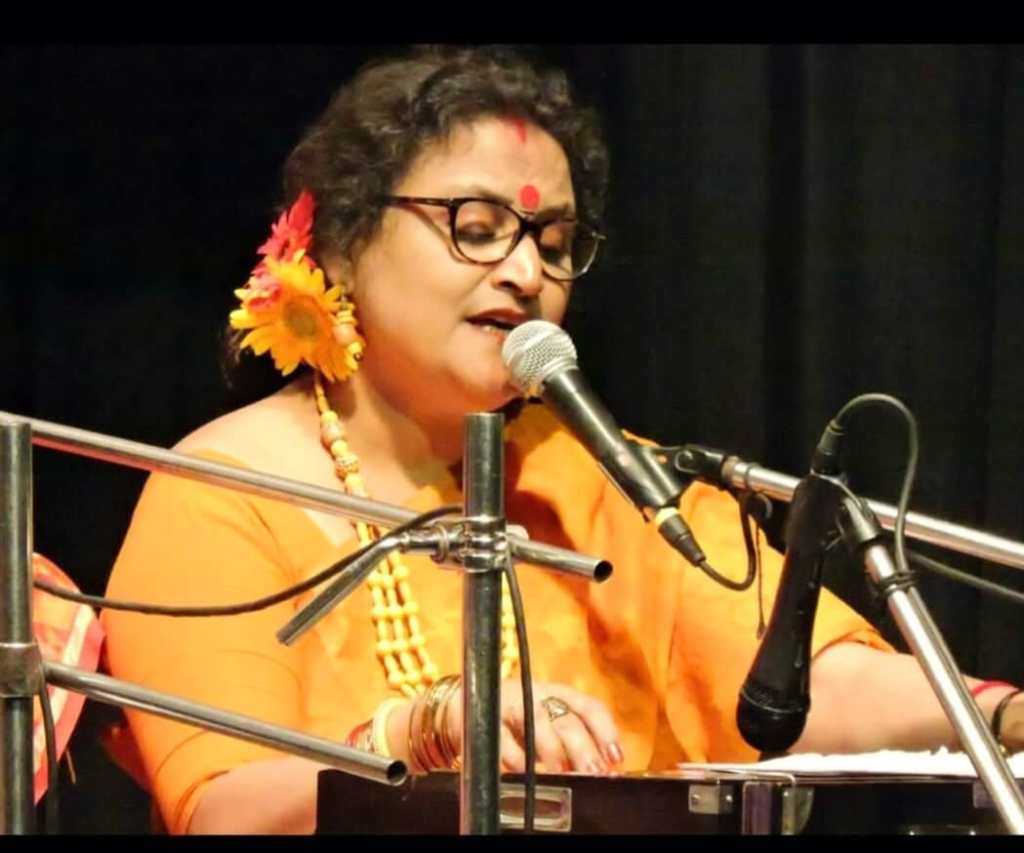
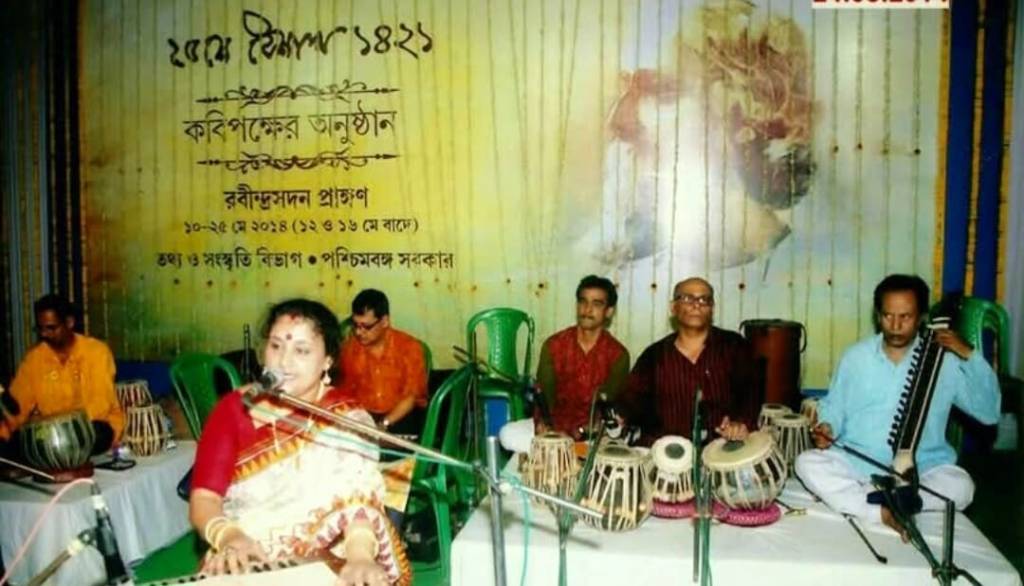
Tutored in classical music by Nabakumar Sarkar (a disciple of Ustad Munawar Ali Khan) and later by Chhanda Ghosh, she completed a four-year ‘Prabhakar’ diploma course from Prayag Sangeet Samiti, Allahabad—while still in school. During her undergraduate years, she finished the remainder of the music curriculum.
After graduating, she married and moved across towns in Bihar, Odisha, and Bengal with her husband. Yet, she frequently returned to Kolkata, allowing her to continue training in Rabindra Sangeet under esteemed figures like the late Dwijen Mukherjee, Swagatalakshmi Dasgupta, and Promita Mallik. Throughout her travels, she performed at Bengali community events and private functions, including those at her husband’s workplace, PowerGrid.
If you listen carefully, an element of pathos lingers in Aparna’s renditions—perhaps reflecting personal loss, as she has mourned many loved ones in recent years. While in Kolkata, she seized every opportunity to perform at upscale venues like Nazrul Tirtha, Sishir Mancha, and the ICCR.
Aparna maintains a YouTube channel and has released albums under Bhavna Records and Pianissimo. She is a regular at Rabindra Sadan’s annual Kabipaksha, celebrating Tagore’s birth anniversary. Currently, she is over the moon after receiving an invitation to perform at the prestigious Shilpakala Academy in Khulna, Bangladesh. Though geographically close to her native state, she is euphoric about this overseas debut.
When asked about her favorite singers, she lists a galaxy of legends: K.L. Saigal, Asha Bhosle, Mohammed Rafi, ghazal maestro Jagjit Singh, Hemanta Mukhopadhyay, and Tagore aficionados like Kanika Banerjee and Sagar Sen. “Earlier, I enjoyed Beethoven’s masterpieces and music from The Sound of Music,“ she adds wistfully, “but not anymore.”
Aparna staunchly adheres to the Guru-Shishya Parampara ideology. “No learning is ever complete without the Guru’s guidance,” she asserts. “The paths are many, but only the Guru can steer you safely to your destination.”
On the influx of modern elements into classical or semi-classical music, she opines, “Each genre has its essence. You may like it or not, but there’s no need to drown it in loud orchestrations.”
Reluctant to speculate on the future of vocal music in India, she humbly admits her learning never stops. As our tête-à-tête concludes, her advice to budding singers is firm: “To master music, you must develop a keen ear for its nuances—and above all, practice, practice, practice!”
 COUNTRY SQUIRE INDIA