


BY RUCHIRA GHOSH
Bengali Diaspora in Delhi NCR Observes International Women’s Day
Every year on March 8th, International Women’s Day is celebrated worldwide. On this day, men from all walks of life—regardless of race, faith, profession, or social status—strive to honor and express gratitude to the women who have touched their lives. This includes mothers, grandmothers, aunts, sisters, cousins, wives, and countless other relationships that exist across diverse societies and cultures.
The celebrations take various forms globally, ranging from seminars and processions to the launch of educational and welfare schemes, particularly in underdeveloped countries and orthodox societies. Intellectual and cultural events also play a significant role in marking the occasion.

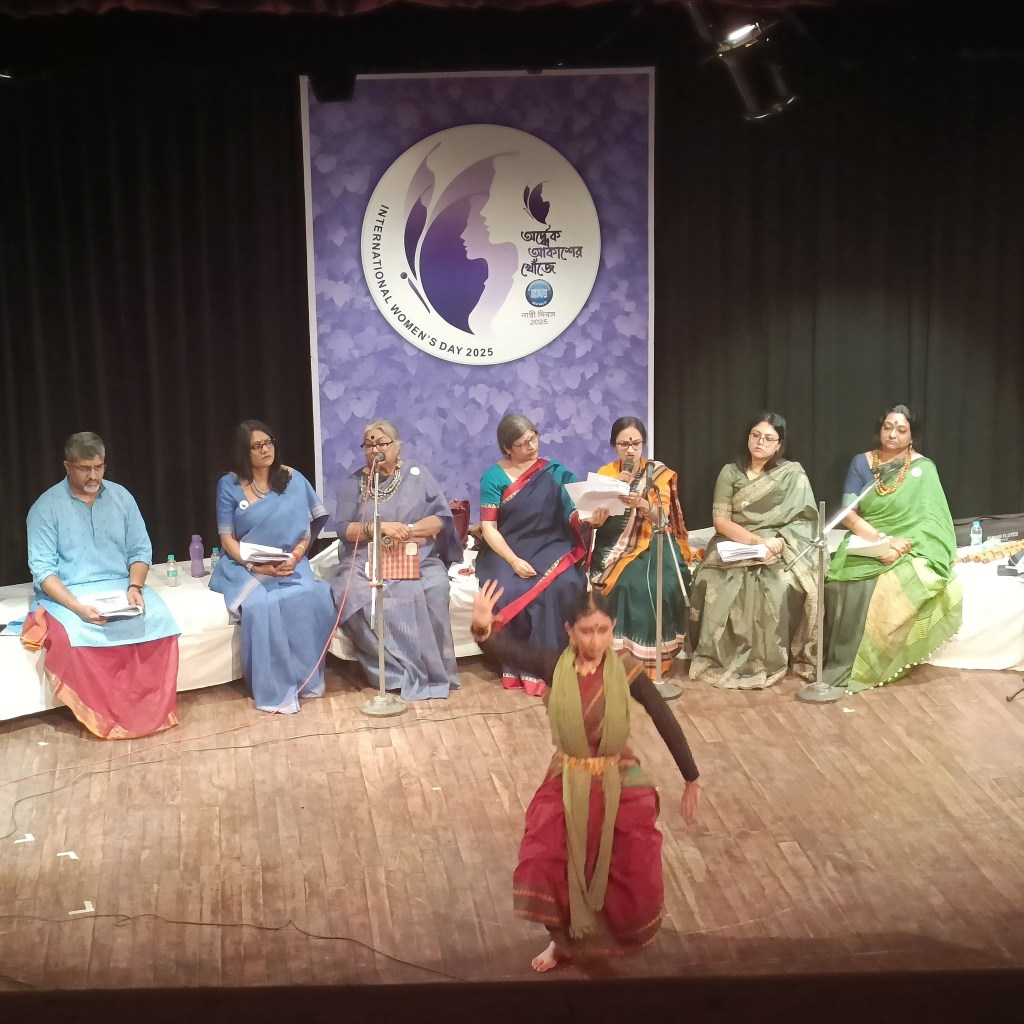


In the national capital, New Delhi, the Bengal Association, a cornerstone of Bengali culture in the sprawling metropolis, celebrated the day in its unique style. The event was held at the Muktadhara Auditorium, located in the heart of the city. The evening began with a powerful performance titled Pathe Ebaar Namo Saathi (Time to Hit the Roads, Comrades), featuring two inspiring songs: Jago Nari Jago Bonhi Shikha (Awaken, O Woman, You Are a Live Flame) and Sankoncher Bivwalata Nijere Opoman (Shyness and Hesitation Lead to Self-Disparagement, and Must Be Overcome). These songs, penned by the legendary Rabindranath Tagore, were performed by a group of talented women, showcasing their vocal and instrumental prowess on the tabla, synthesizer, and more.
This was followed by a vibrant poetry-dance-song presentation titled Moner Kotha Koi (Straight from the Woman’s Heart), which poignantly depicted the silent suffering of women at the hands of their families and society. The performance highlighted how women’s voices are often stifled, reduced to whimpers when they dare to speak up.
While the modern era presents a seemingly altered picture, the question remains: has anything truly changed? Even today, countless nameless and faceless women suffer in the shadows, their struggles unnoticed and unacknowledged. Much work remains to be done to achieve true equality and justice.
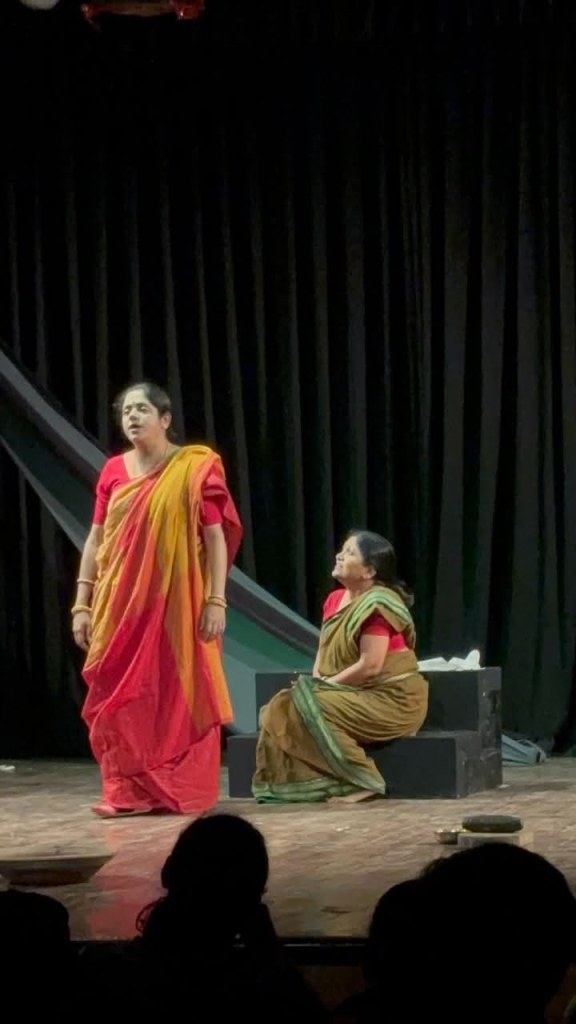
The evening concluded with a performance by a local amateur theatre group, Sanjhbaati (Lamp of Twilight), which presented an adaptation of Tagore’s short story Streer Potro (Letter from the Wife). The story revolves around Mrinal, a childless housewife, who, during a seaside pilgrimage with her marital family, writes an open letter to her husband. In a subtle yet powerful manner, Mrinal recounts the injustices and atrocities she endured in her in-laws’ home, while also criticizing her husband for his apathy and controlling behavior. She declares her decision not to return to that oppressive environment, choosing instead to carve out her own path in life. The performance, featuring graceful dancers and passionate singers, left a lasting impression on the audience.
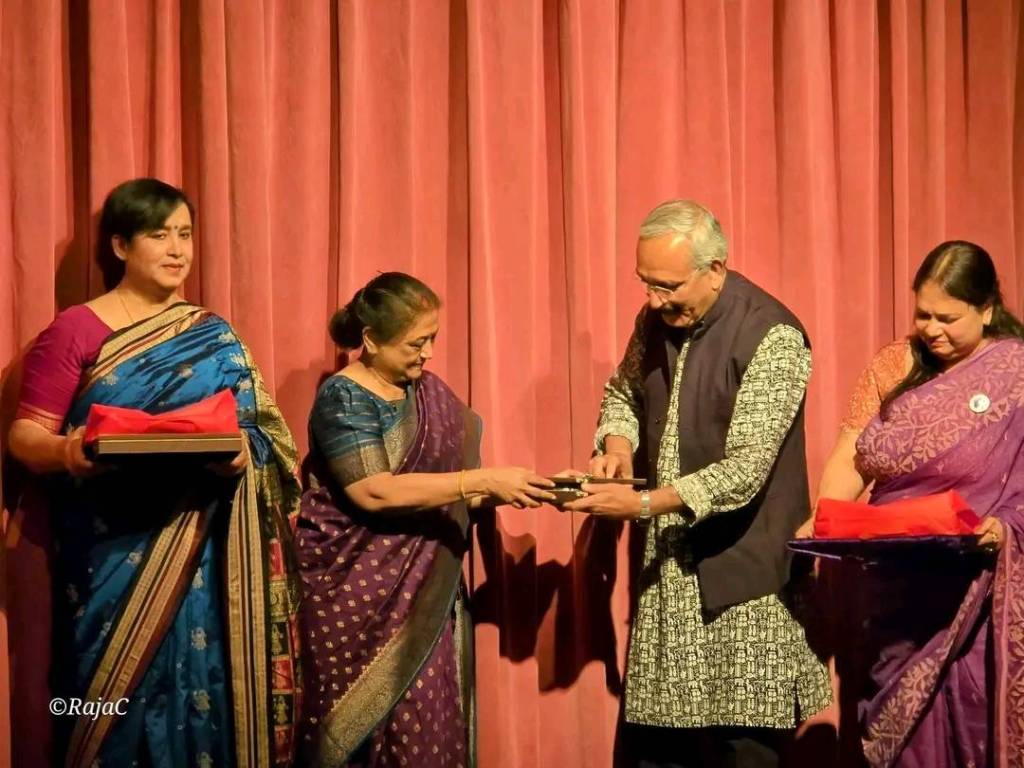
The event was graced by distinguished guests, including renowned Kathak dancer Smt. Bhaswati Mishra and celebrated author Dr. Taslima Nasreen, both of whom were honored for their remarkable contributions to art and literature. The evening served as a poignant reminder of the ongoing struggle for women’s rights and the need for continued efforts to create a more equitable world.


 COUNTRY SQUIRE INDIA