

BY RUCHIRA GHOSH
The Nobel laureate Rabindranath Tagore is to Bengali literature what Shakespeare is to English literature. Dislodge both, and their magnificent edifices would come crumbling down. It would be no exaggeration to say that Tagore’s versatility and the vast range of themes he addresses often leave readers and audiences overwhelmed—or, to use a colloquial term, mind-boggled.
His subjects span the changing seasons, lyrics brimming with patriotism, tree plantation, crop harvesting, and even the humble tea ceremony (highly inspired by Chinese and Japanese customs, of course!).
However, it is Tagore’s rich repertoire of Puja (prayers) and Prem (the entire gamut of love) that have predominantly enthralled aficionados, both at home and abroad, for decades.

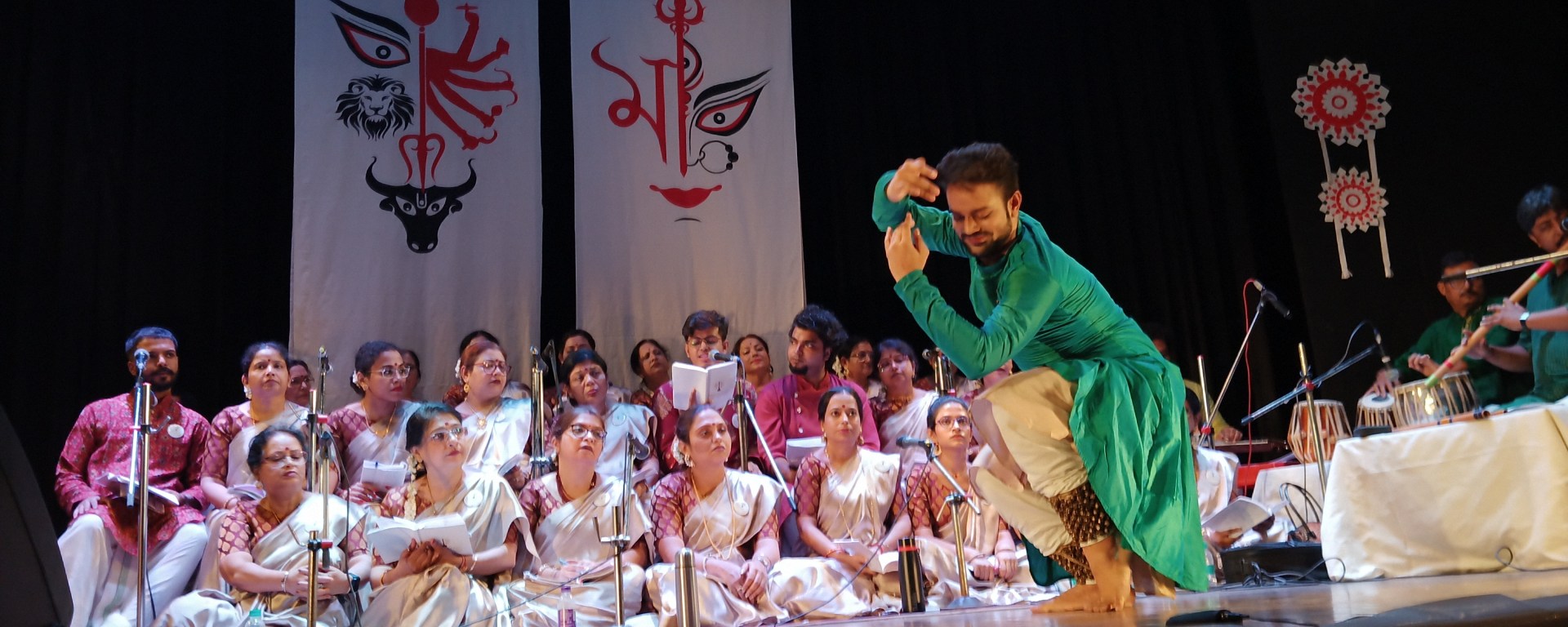
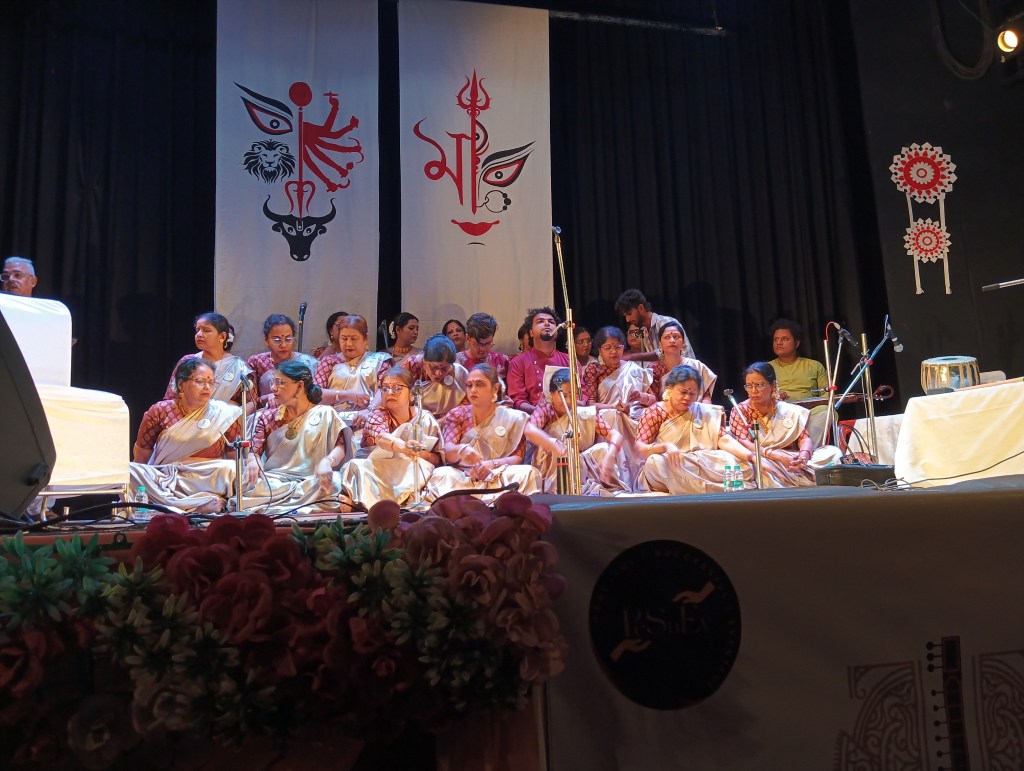
Recently, during a weekend, I had the opportunity to witness a breathtaking musical presentation titled “Momo Hridaye Roho” (Abide in My Heart, O Lord) staged by a Delhi-based musical group named “Swarchhanda,” which signifies a harmonious blend of melody and rhythm.
It is intriguing to realize that in Tagore’s works (also known as the Bard of Jorasanko, his ancestral residence in Kolkata), the line of demarcation between God, the Almighty, or the Creator often becomes blurred, even obliterated. One may find it difficult to determine whether the Poet is addressing a loved one (read friend) in their mortal form or the Divine Being.
In essence, the poet desires to highlight that the microcosm of worldly love is merely a reflection of the macrocosm of universal love. At a spiritual level, these two aspects merge to form a universal existence. It is this unprecedented approach that makes his poems and lyrics all the more endearing to readers.
Furthermore, discerning readers and scholars note that ‘love’ as depicted in Tagore’s works is neither carnal nor gross; rather, it exudes an otherworldly charm.
To return to the presentation, it centered around an adaptation of Tagore’s modernistic romantic novel “Shesher Kobita” (The Last Poem). The story unfolds as follows: During a brief stint in a hill town, the protagonist, Amit, meets and falls in love with Labanya, an educated and erudite lady who is strikingly and refreshingly different from the women in his upscale social circle. Their bond of love intensifies with each passing day; however, this love is muted rather than effusive, subtle instead of exuberant.
As the saying goes, all good things must come to an end. Amit is summoned back home and is compelled to pack his bags, resulting in the end of this idyllic relationship. They part ways, fully aware that their paths may never cross again.
The entire narrative was meticulously conveyed through mellifluous lyrics interspersed with spirited and passionate verses penned by Tagore himself. Songs like “Chole esho ghore parabashi” (Come Home, Ye Relentless Wanderer), “Sunil Sagarer shyamal kinare” (I Met the Beauteous One on the Shores of the Azure Ocean), and “Koto baro bhebechinu” (I Often Mull a Total Surrender at Thy Feet) were performed, with some songs accompanied by dances from seasoned dancers. The romantic saga concluded on a poignant note, with Labanya penning a heartfelt poem to bid farewell to her beau, eponymous with the title of the novel. The presentation wrapped up with the soul-stirring melody “Tumi rabe nirobe” (Thou Shalt Linger on My Heart in Utmost Serenity).
Shows like this demonstrate that love is a many-splendored thing, even in this mundane world of ours.
 COUNTRY SQUIRE INDIA