


BY RUCHIRA GHOSH
A Graphic Designer-Turned Astrologer
India is rapidly becoming one of the world’s most powerful economies, boasting nuclear power and recently sending an unmanned spacecraft to the Moon. Yet, many Indians remain deeply invested in astrology. From birth to death, astrology significantly influences their lives. They meticulously consider moon phases, planetary alignments, lucky days, auspicious times, and eclipses before undertaking significant activities such as travel, job interviews, business deals, weddings, and even C-sections.
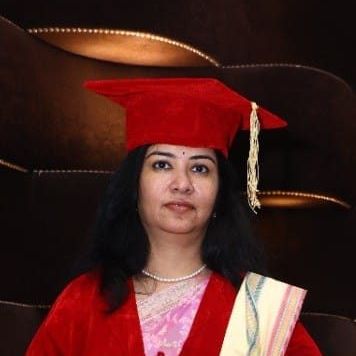
Having lived nearly sixty years, my closest encounter with astrology was reading Linda Goodman’s Sun Signs in college. Despite my skepticism toward Vedic sciences, I was pleasantly surprised when my former colleague, the beautiful and vivacious Pooja Arora, a Multimedia Designer, transitioned fully into astrology. Here is our conversation:
Q1. Please tell us about your early years.
I was born and raised in Delhi. I have a Postgraduate degree in Management and a diploma in Multimedia and Graphics. I started working at 19 and spent a decade in media graphics and the e-learning industry. I studied Vedic Sciences under Professor Ashok Bhatia and Acharya Bhavna Bhatia, beginning formally in my mid-20s. I have been consulting in Vedic Sciences for over 10 years.
Q2. How did you get attracted to astrology, and how was the training?
It’s a long story. (Smiles) I have been interested in spirituality, astrology, and numerology since a young age. At 21, I attended spiritual camps and, while working as a Multimedia Designer, an astrologer encouraged me to pursue Vedic Sciences professionally. I enrolled in the All India Federation of Astrologers’ Societies (AIFAS) to study Jyotish and Vastu, accelerating my learning. I continued my studies and learnt Pranic Healing, Vedic Astro Numerology, Geopathy and Aura Scanning. Still learning Vedant, Bhagwat Gita and other scriptures under my mentor, Dr. Vikrant Singh Tomar, Convenor United Consciousness.
Q3. What is your current profession?
I am practicing Astrology, Vedic Astro Numerology, Vastu and Geopathy as a Consultant and Teacher. I hold the responsibility of Governor Central Madhya Pradesh (International School of Vedic Astro Numerology, ISVAN).
Q4. Can you share some cases where your predictions have come true?
Many cases involve predictions about marriage, childbirth, and job timings that happened exactly as predicted. However, I focus more on providing solutions they require.
Q5. Can you name some notable people who have consulted you?
As part of my professional ethics, I can’t disclose names. People from various fields and age groups consult me, mainly about marriage, health, children, divorce, career choices, mental health, and business decisions like naming companies and launching products based on numerology.
Q6. What are your views on astrology as a science?
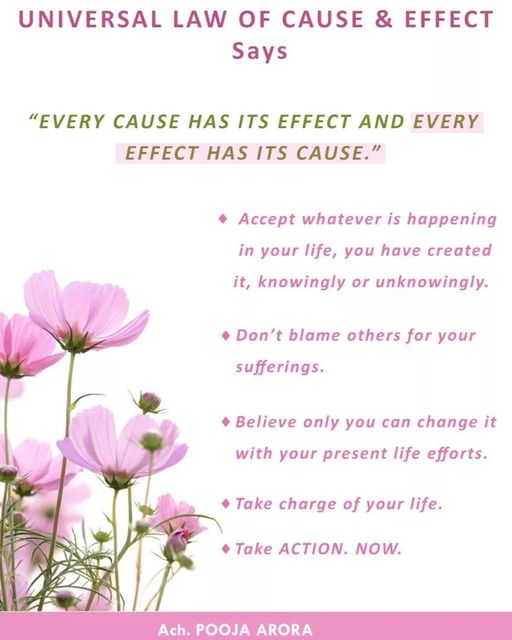
Astrology and other Vedic practices are definitely sciences. Planetary movements affect Earth and, by extension, human bodies made up of the same five elements. Ayurveda also explains how imbalances in these elements cause illnesses. Vedic sciences are ancient and precise in calculating planetary movements and are based on the karma theory, now known as the Universal Law of Cause and Effect.
Q7. What are some malpractices and myths in astrology today?
With the rise of modern education, traditional Vedic knowledge has been lost, leading to misconceptions. People now view Vedic Sciences as superstition. In the past, Vaidyas (doctors) used to treat patients based on their Kundli (birth chart). Astrology is meant to guide people on the right path and provide solutions to their problems. Few astrologers learn from short term courses or from internet, without any Guru’s guidance, spoils the image of our Vedic sciences. Our shastras are very powerful, they were written to guide people. ‘Jyotish’ word itself comes from the word ‘jyoti’, meaning light. A Jyotishi is one who’s job is to show light to the people who are in the darkness or sufferings.
Q8. How can one beware of fake astrologers?
Science is misused when it instills fear or makes false promises. It’s up to individuals to judge and decide what is right.
Q9. How relevant do you think astrology is today?
In a high-paced world, people face stress, depression, relationship issues, health problems, and financial issues. Astrology aims to alleviate suffering and guide people towards good karma. Simple techniques, like drinking water in the right manner can heal their emotional imbalance due to affliction of moon in the chart.
Q10. What is the position of astrology in India compared to the West?
Astrology is gaining popularity in both India and the West. Many Western astrologers prefer Vedic astrology. Notable authors like Cheiro and Sepharial, who wrote on palmistry and numerology, spent considerable time in India learning from gurus and practicing sadhana.
Q11. Would you advise youngsters to adopt astrology as a profession?
Yes, I advise the younger generation to learn Vedic science under genuine teachers and work sincerely to help people in times of crisis. True professional astrologers are entrusted with a noble duty, and it’s essential to revive this scientific heritage as it was integral to daily life centuries ago.
 COUNTRY SQUIRE INDIA