

BY RUCHIRA GHOSH
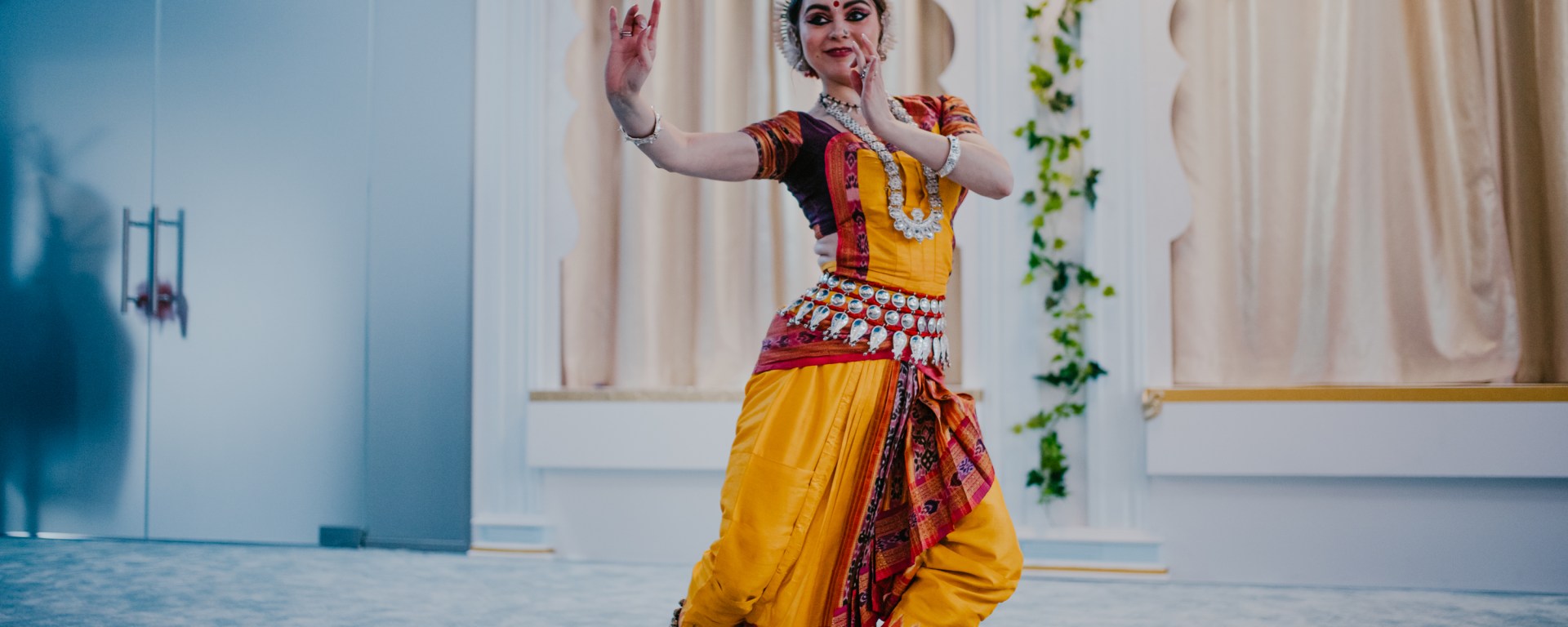
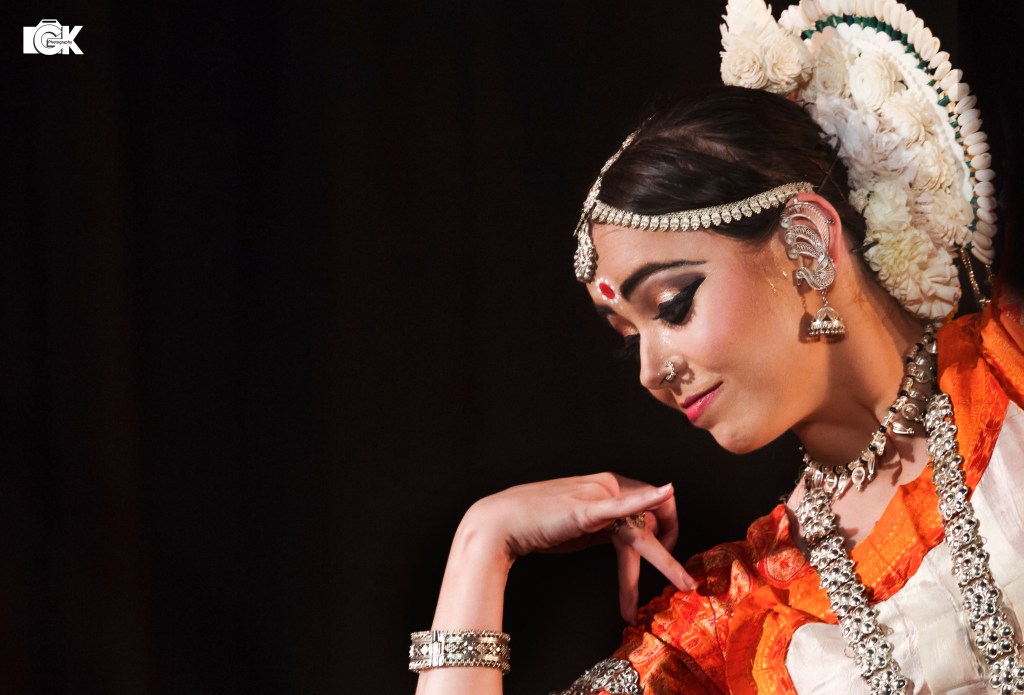
Many years ago, there was a pretty little girl who lived in a happy family in a city in Poland. What made her much happier was all forms of Performing Arts. While she was growing up, she began to be enchanted by Indian Classical dances… Fast forward to the present. The little girl, Zofia Lichota, is now a youthful lady and a highly efficient Odissi danseuse who has made India her second home. Read on…
We would like to know about your early life, schooling, education, family, etc., in Poland.
I grew up in a big family full of love and understanding. I am the youngest of my siblings (two sisters and two brothers). Since childhood, I’ve been very interested in art. My parents took care of me and helped me to develop my interests. I attended a music school and learnt to play the violin for three years but somehow, I felt there was so much more to explore. I tried singing classes, theatre activities but eventually when I first entered a dance class, I knew this was my destiny. I was also a very serious and hard-working student with the best marks. I always wanted to give my 100% in any subject.
How did you get interested in India, especially Indian culture?
The field of my study has always been strictly related to dance. I have been performing since childhood at many stage functions in Poland with TENDI – Contemporary Dance Studio. However, my tryst with Indian dance started in 2006 when I joined TAAL Indian dance group lead by Mrs. Sabina Sweta Sen. I took part in my first classical dance workshops with renowned Odissi dancer Dr. Pompi Paul from Kolkata, who taught me basic steps of the graceful Odissi dance. In the meantime, I was participating in numerous in Poland and abroad which were organized in cooperation with the Indian Embassy in Poland e.g. Bengali New Year Celebrations in Sosnowiec (2009), Independence Day in Warsaw (2011) and Sosnowiec (2012), Bengali Cultural Day in Sosnowiec (2012), Diwali and Holi celebrations in Krakow, Wroclaw, and Warsaw. I also performed in the Bengali dance drama “Shyama” prepared by TAAL dance group on the occasion of Tagore’s 150th Birth Anniversary supported by the Indian Ambassador H.E. Monika Kapil Mohta, ICCR, and Indo-Polish Cultural Committee. In 2010, I came to India to take part in a unique project: “On the track of dance” organized by TAAL dance group from Poland. During the month-long journey, I had the opportunity to learn basic steps of Indian classical dances from famous gurus and dancers e.g. Pallavi Krishnan (Mohiniyattam), Vyjayanthi Kashi (Kuchipudi), Paulomi Basu (Kathak), Pompi Paul (Odissi). That was the time when I realized I would like to come to India and learn Indian classical dance according to the guru shishya parampara tradition. First, I started looking for a teacher in Europe. I joined Kuchipudi dance classes under Guru Arunima Kumar in London. Before coming to India for a scholarship, I performed in many Kuchipudi dance projects e.g. “Poetry in Motion,” “Kanupriya” dance drama presented in Keats House in London. This experience motivated me to apply for a scholarship under ICCR scheme to study Indian classical dance in India. In 2013, I won a prestigious ICCR Scholarship for foreign students to continue my Odissi dance education in Utsav – Odissi Dance Academy in Delhi. In the end of August 2013, I came to India and began learning Odissi under Guru Padmashree Ranjana Gauhar.
Why did you get interested in Indian culture and art forms?
I guess it was all because of the extreme beauty and grace of these dances. There is no other art form in other parts of the world which can compare to these. It’s really impressive how dance and theatre merge into one art form. Additionally, the beauty of Indian music, the sound of the instruments, and attention to small details are so unique and so special.
Why did you opt for Odissi Dance form?
Odissi dance is a very feminine and gentle dance form. When I first saw it, full of delicate and detailed movements, I just fell in love with it. It looks so soft but at the same time grounded and strong. Aesthetically, I really felt it’s worth learning and hence I have been presenting it all over Europe. Traditional Odissi music is also soul-touching. Though I am from a completely different culture yet somehow I can easily relate to feelings and emotions embedded in each music composition.
Your career graph, learning, training, public performances, etc.
I am the founder of an Indian dance group Natarang that has been promoting Indian culture in Poland and Europe for more than 10 years now. I am a teacher, choreographer, and performer and try to give vent to my passion before the public in Poland as well as other European countries. During those lovely years which I spent in India (on ICCR scholarship), I had an amazing opportunity to perform at many prestigious festivals e.g. Khajuraho dance festival, Odissi International Dance festival, or Margi dance festival in Bhubaneshwar. I participated in many dance productions under the patronage of Ministry of Culture as a member of our Guru Smt Ranjana Gauhar’s troupe such as Tagore’s “Chitrangada,” Hindi “Bharat Maa Ki Bindi,” “Geet Govind,” “Nala-Damayanti”. I travelled countrywide and presented Odissi dance. Every year, I perform at Bhavan Cultural Centre in London, Lorenskog Cultural Centre in Oslo. I organize dance workshops in my country and in Norway. I am a yoga instructor too and occasionally organize yoga classes. Most importantly, I stay in touch with my Guruji and visit India as often as possible to continue my dance education.
Your take on Guru shishya parampara? Your views about your mentor Shrimati Ranjana Gauhar ji?
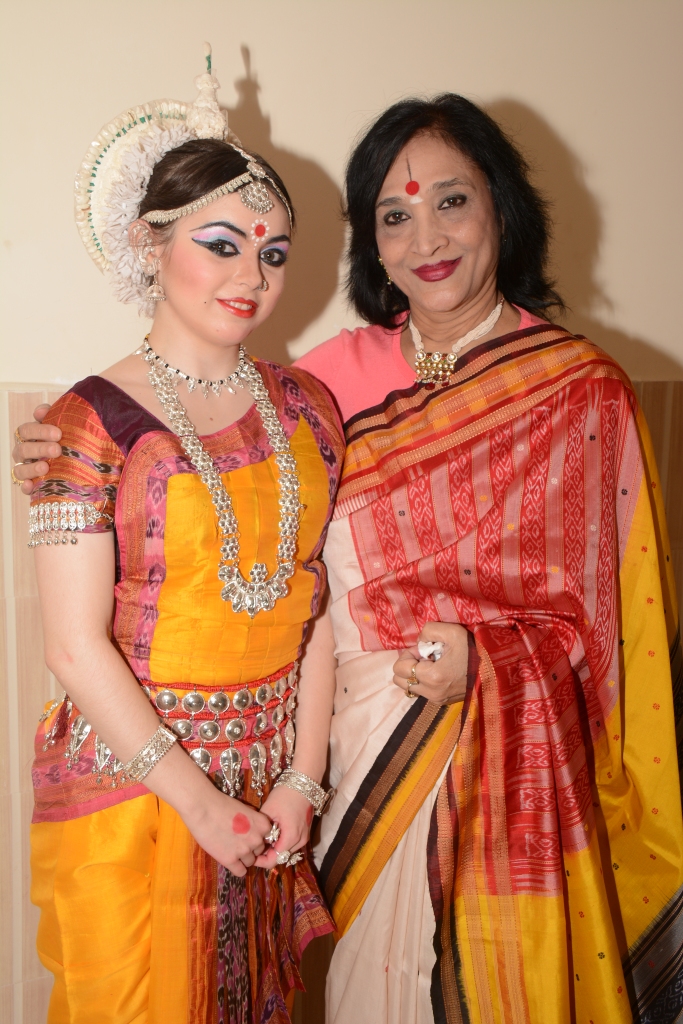
The experience of learning dance under such a renowned Guru as Padmashree Ranjana Gauhar definitely took my dance to the next level. Not only in the matter of learning proper technique and steps but she also taught me that the transition between the movements is as much important as the movement itself. The whole dance composition should be consistently executed from first to the last step. Grace and smoothness must not be lost at any point. Only then we will be able to highlight the authentic flavour of Odissi dance form. Also, my Guru always emphasizes that regular practice unites our body with the art form. In the beginning, it was very difficult for me to understand that. I wanted to achieve results as quickly as possible. But you have to trust the process and let your body go deep into it. There are certain body limitations which can only be overcome by consistent hard work. I feel still there is so much to work on. But with the support of my Guru, I am sure I can achieve more and more. Learning dance from my guru is just a part of the whole process of following the Guru shishya Parampara tradition. One of my Guru’s prime objectives is to show me how to be a good human being and understand the world around me, how to cooperate with other dancers to let Art flourish in society. It’s all about sharing our true love and appreciation for the world and its people, to enjoy and understand human feelings better, and not being afraid of diverse emotions which are part of our existence. Through dance, we can express such difficult emotions as anger, sadness, loneliness and many more. Portraying the entire gamut of emotions through dance is an effective therapy for all those who face emotional turmoil. That’s only a tiny example of how any dance form encompasses profound philosophy. Each day which I spend with my Guruji helps me to understand such intricacies of this Art form in depth.

Your views on Indian culture society, food, sari festivals, languages etc?
I must admit that I love Indian food; it’s one of the best cuisines I have ever tried. In the beginning, I was a little scared as to how to adjust to so many varieties of spices but very quickly I began to enjoy them. Now I cook Indian food at home at least twice a month. Indian society is very complex and vastly different from societies in Europe. I really appreciate the importance of spending time with the family which is disappearing in the western world. Indians are very kind and open to learning about different cultures. Indian clothes are extremely beautiful and comfortable. Whenever I am in India, I wear only Indian clothes. The colours and patterns are really beautiful and perfect for being worn in hot weather. I am still not very comfortable with wearing a sari but I am confident one day I will get used to it.
Please outline your plans for the future.
In the future, I definitely want to promote Odissi in Europe on a wider scale. I plan to hold online and regular classes for anyone who would like to learn it. Also, I am planning to start teaching this art form at the University level. I have a certificate from my Guruji so hopefully I will be able to take this art to the next level. I will endeavour to share the beauty of Odissi dance all over the world. Last but not least, I would like to visit India again, hone my skills under the tutelage of my Guruji, and be part of her wonderful dance productions. I hope all this will actually happen!
 COUNTRY SQUIRE INDIA