

BY RUCHIRA GHOSH
‘What was a Baul (wandering minstrel) doing on the premises of JNU, an internationally acclaimed varsity in the Indian capital?’ I wondered, a little flummoxed, ever since I read and heard of him.
My doubts were dispelled when I watched him perform at a public function a few weeks ago.
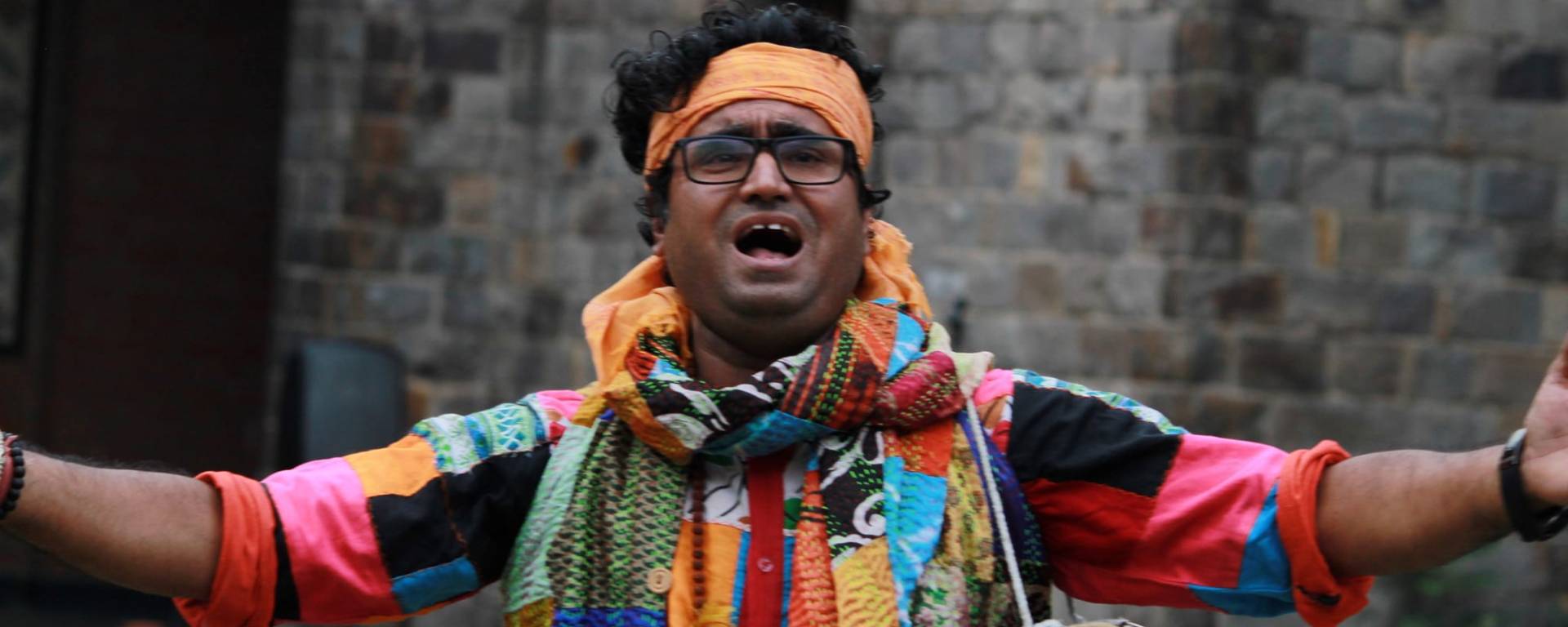
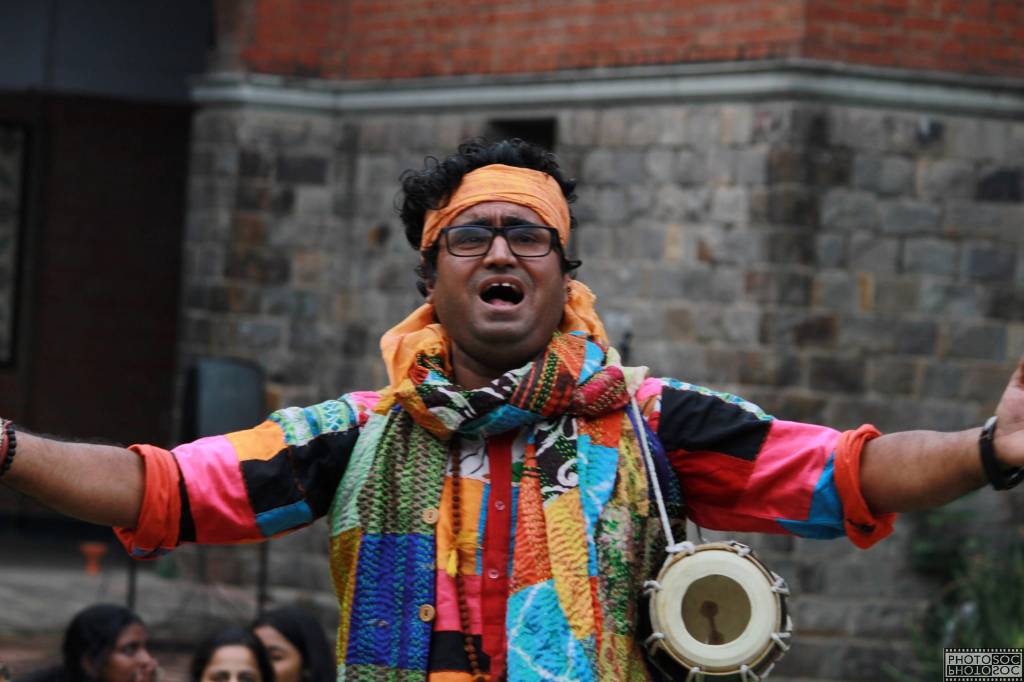
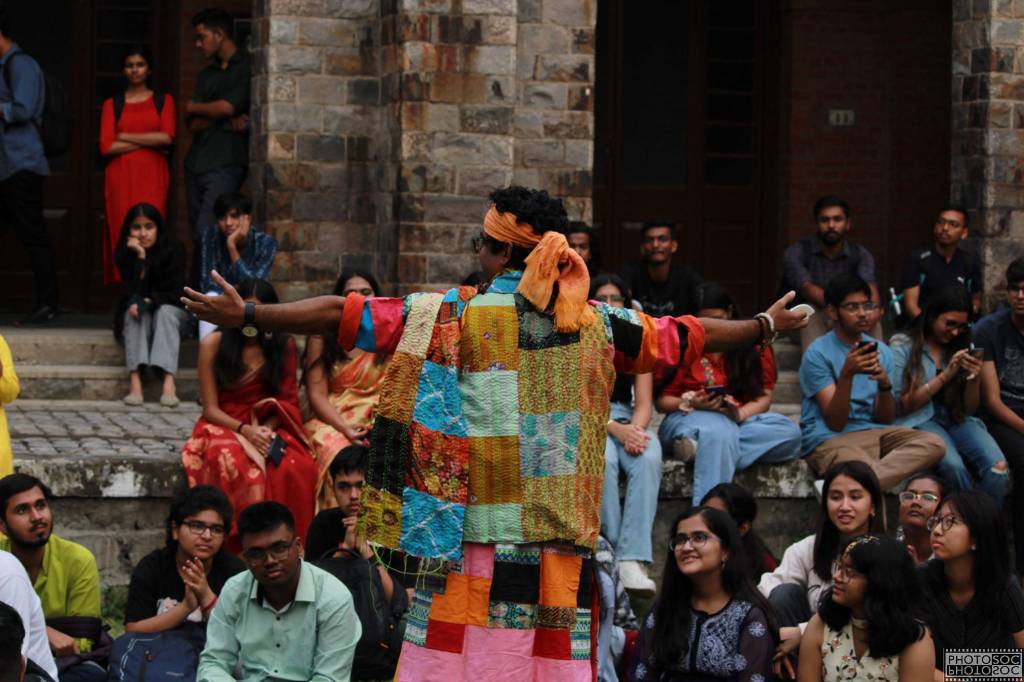
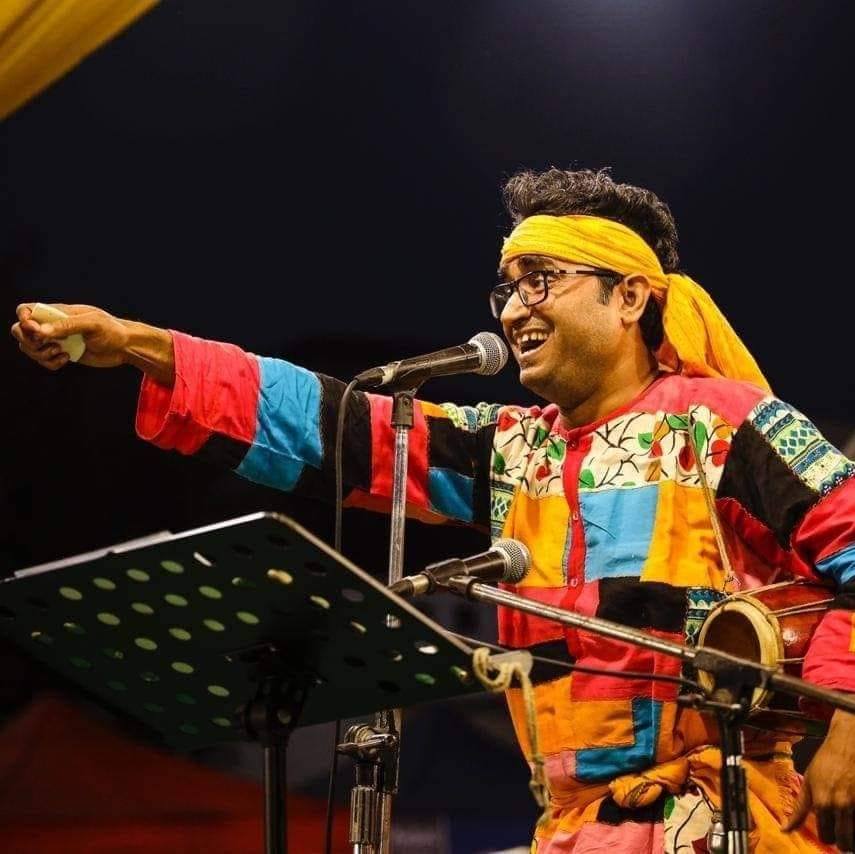
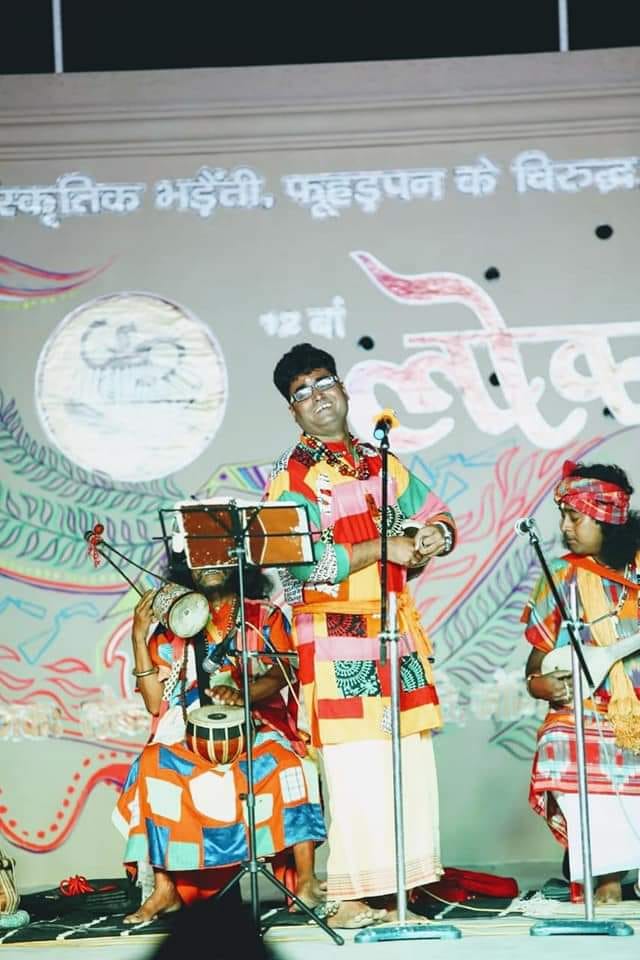
The gentleman who goes by the name Shambhu Nath Sarkar, is middle aged, bespectacled, sporting a headful of curly hair. It was amazing to see him speedily switch over from his casual workaday clothes into the characteristic Baul attire: a patchwork kurta, headscarf, cummerbund, ghungroo (ankle bells) on one foot and an ektaara (one-stringed musical instrument) in hand.
Sarkar began slowly, softly, gradually as the music began to unfurl itself, the change of scale and modulation stunning the listeners. His was a powerful voice replete with fervour and passion.
For the uninitiated, Bauls are an order of religious singers hailing from Bengal whose songs revolve around perennial, lofty themes of joy, love, and yearning for a rapturous union with the Divine. The lyrics of Baul music interpolate a profound sense of mysticism, a desire to merge with the Almighty. A salient feature of this philosophy is “Deha tatva” which depicts that spirituality is related to the physical body rather than the mind. Consequently, a Baul conducts a lifelong search for his/ her ‘Moner Manush’ (ideal friend, soulmate) who doubles up as the Divine Spirit.
On the sidelines of the event, I managed to have an interaction with Sarkar. Excerpts from the conversation follow:

Please tell us about your early years, education, family…
I was born in Birbhum, West Bengal. When I was a few months old we relocated to Delhi, only to shift back to our hometown after a few years. My schooling was mainly in Delhi and West Bengal. After finishing school, I got a simple job in JNU but my higher studies continued steadily – except for a spell of illness – for the next few years. I graduated from Delhi University and completed my MA in Public Administration from Annamalai University. As of now I am working as Section Officer in the JNU.
How did you turn to Baul geeti?
Well, my father, Dilip Kumar Sarkar also worked in the JNU and he was an accomplished Baul singer; naturally he was my first tutor. My father is also a poet who has an anthology of Baul songs to his credit.
Right from my childhood days when I lived in a village near Tarapith, Birbhum, I used to mingle with Baul singers who would visit our village for daily “madhukari” (seeking food in lieu of singing spiritual songs). I still remember how I made a khamok (an instrument)with a piece of nylon wire and a tin container of Lactogen. Later my father bought me a proper “khamok” and I started playing it regularly. Would you believe Baul music worked like medicine during my illness and helped me recover speedily? Thereafter I got connected with various Bauls in Santiniketan.
Who were your Guru/s? Other Baul singers who inspired you?
In the year 2011, I first met my mentor Shri Jagannath Das Baul at Sonajhuri Haat, located in Santiniketan. I began learning and singing with him in Sonajhuri itself. Additionally, I invited him to Delhi several times. I also visited Joydeb Kenduli which is considered the fountainhead of Baul music. There are three ashrams in Joydev Kenduli which are totally dedicated to teaching and practice of Baul music throughout the year. Over the years I began to imbibe the crux of the philosophy of Baul music. I must confess it is an uphill task for someone like me who is staying in a Metropolitan city like Delhi, to understand the philosophy of Baul songs in-depth. But I firmly believe, if you try to discover your inner-self and constantly practice, it will happen one day. Hence my quest for the Absolute is still on.
Your career includes live performances CDs albums etc?
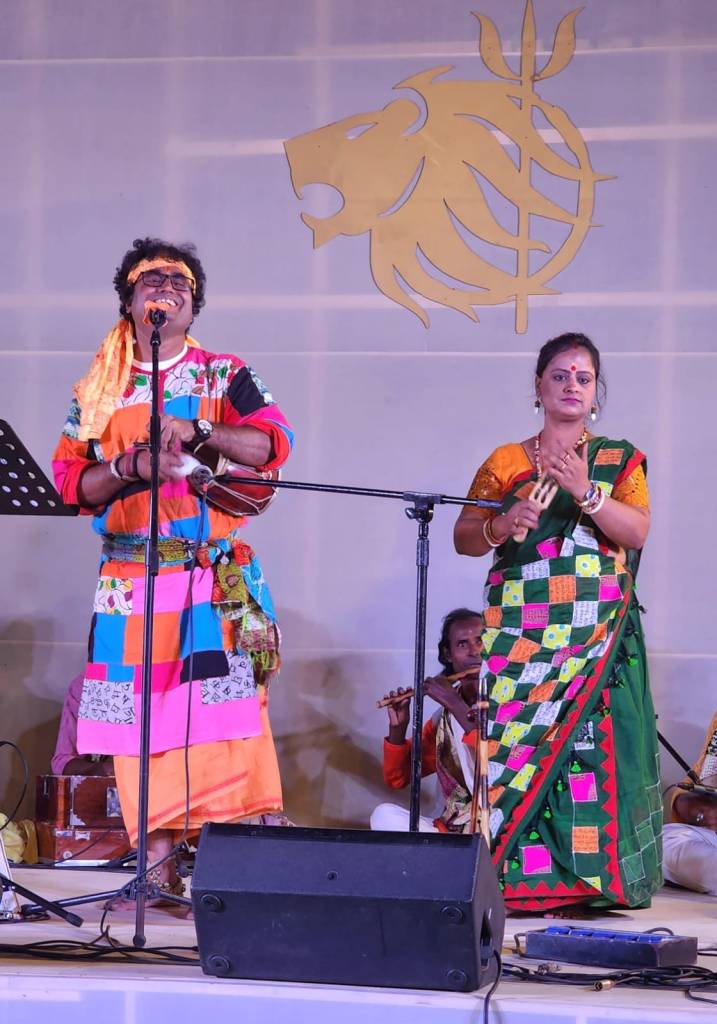
I have performed in various live and stage shows like the Times Literature Festival (Mumbai) in 2017, TISS Mumbai Literature Festival in 2018, Lokrang Festival in Kushinagar in 2019, Sangeet Natak Academy in 2019 and I’ve been involved in various performances in and around the national capital Delhi during Durga Puja, Poush Mela (winter festival) etc.
What is the status of Baul gaan vis a vis other genres of vocal music?
I have realized that Baul is not just some kind of folk music but a profound philosophy. In the course of my journey so far I feel that in a nutshell, Baul philosophy is “manus dharo manus cheno hrid majhare manus rakho” ( lit: mingle with ‘Man’, discover him in depth and finally give him a niche in your heart). Baul is a class apart.
Bauls are generally associated with a rural background. How does it feel to be a Baul in a metro like Delhi?
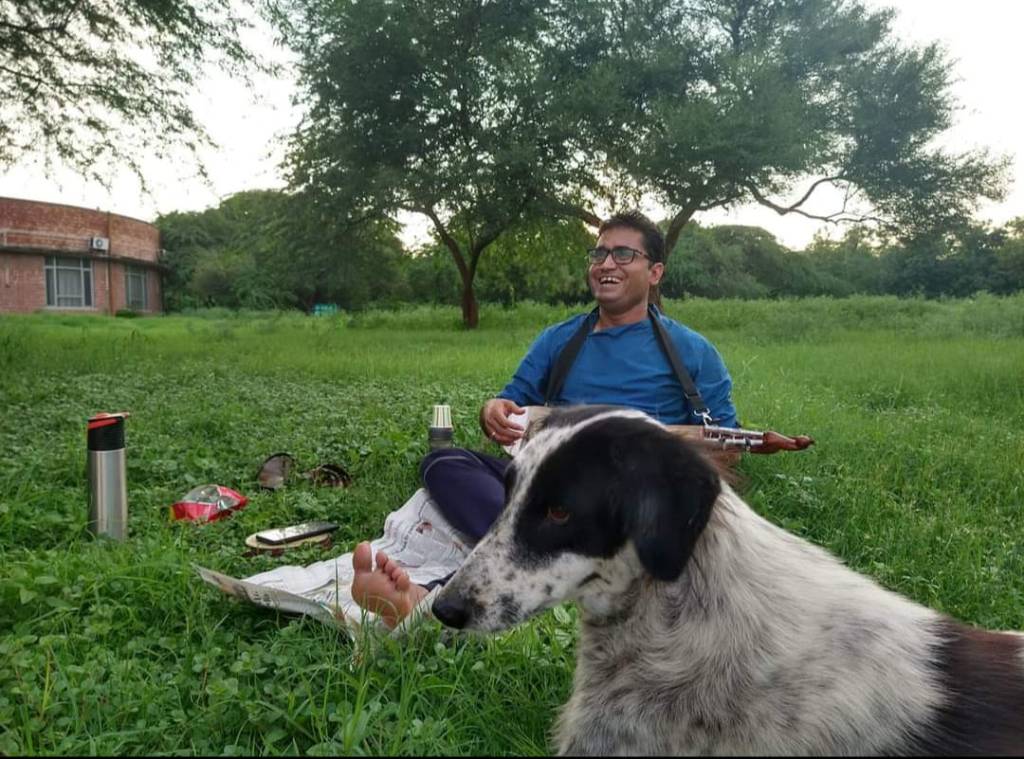
Yes, it is very difficult to perform Baul songs while residing in a mega city like Delhi; the very essence is lacking. Let me narrate an interesting incident. Once after my performances during Durga Puja, a reputed music composer asked me “bari kobe fire jachcho?”(When will you go back home?). He probably thought I had come from all the way from West Bengal for the show. He was amazed to learn I was a local. Such isolated incidents make me feel good. Over the past few years, I have developed this new habit: on Saturdays you will find me lounging under a shady tree on the campus playing on the ektaara and practicing with great gusto. I am determined to continue my singing and hone my skills, whatever it takes.
What are some basic qualities which beginners must have to be a successful Baul singer?
I am still learning, and I am beginning to realize that Baul singing is all about feelings. Baul is not only a singing style but a way of life. So, a singer needs to possess oodles of emotions.
How do you juggle a full-time job with your passion?
It is indeed very tough but Baul singing is my passion. I enjoy singing as it is a real stress buster for me. It makes me more efficient, and sincere towards my work. After my daily routine work, I devote maximum time to practicing my Baul music.
Do your family members also pursue this genre of music?
My wife Rupa is also a singer though initially she dabbled in Tagore’s songs and Nazrul Geeti. Having m0ved on to modern Hindi and Bangla songs she currently joins me on the stage to sing folksongs (lokgeeti). My older son Darpan plays the dotaraa (two-stringed musical instrument). I rope him in for some of my important programmes. He lives in Mumbai and pursues music seriously. Arpan the younger one plays the harmonium when I perform on stage.
Do you foresee a bright future for Baul songs now that there is new talent surfacing?
Well as a matter of fact I have great respect for all newcomers who are singing Baul songs these days. But I believe that people like me are merely “dharok and bahok” of Baul music. In other words, it is our duty to imbibe the musical legacy in our hearts and then uphold and cherish it forever. Baul Music is more important than us. And like I already said, I am barely scratching the surface and trying to sing as best as I can since I am passionate about this music.
 COUNTRY SQUIRE INDIA