

BY RUCHIRA GHOSH
During his turbulent tumultuous teenage years, Robi (Nobel Laureate Tagore) stumbled upon ‘Padas’ /devotional lyrics composed by ancient Vaishnava (adherents of Lord Krishna) poets and rendered in the Maithili dialect. This genre of poetry frequently appeared from time to time in the issues of ‘Bharati’ a popular literary journal of those times. Incidentally, the culturally enriched Tagore family happened to be one of its regular subscribers. So that was how the young lad had easy and unlimited access to them. The ‘Padas’ captured his fancy. So enchanted was Robi that he came up with an ingenious plan. He scribbled a few lyrics in the same vein, under the pseudonym of “Bhanu Singha.” Secondly, he wrote in what was familiarly known as Brajabuli. This was Maithili with a smattering of Bengali and a few other dialects spoken in eastern parts of the country. When he showed his compositions to a few family friends-cum-literary connoisseurs they were well appreciated. What is more, some enthusiasts in the circle even got them published to further encourage the youthful creative artist. Young Robi’s joy knew no bounds! Thereafter he never had to look back. Between the ages 15-16 and up to age 23, he composed a series of 21 padavalis/verses. It was much later that he set them to music.
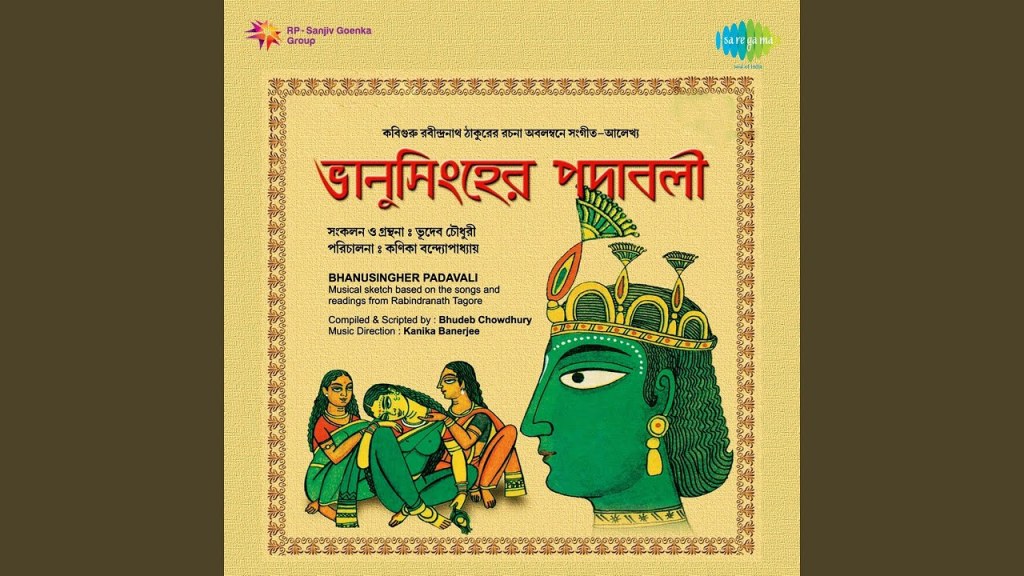
This ‘musical’ anthology, which everyone now recognizes as “Bhanu SingherPadabali” forms an important part of Bengali poetry.
The pivot point of “Bhanu SingherPadabali is highlighting the myriad aspects of Radha & Krishna’s (the fabled pair) emotional, passionate and romantic bonds. Radha’s intense yearning for her beloved Lord, often long spells of separation (viraha) and ultimately a rapturous reunion are deftly captured and vividly portrayed in each of these pieces. Another sterling quality of these “Padavali” is the lilting musical quality palpable in each one of them; the melody is simple with a spontaneous appeal to the heart. Set majorly in the traditional ‘kirtan’ style the accompanying musical instruments happen to be rudimentary e.g. flute, cymbals and sri khol (country drum) and nothing beyond.




Thirdly, the quaint language (diction) far removed from what we are accustomed to in our daily lives is so refreshing!
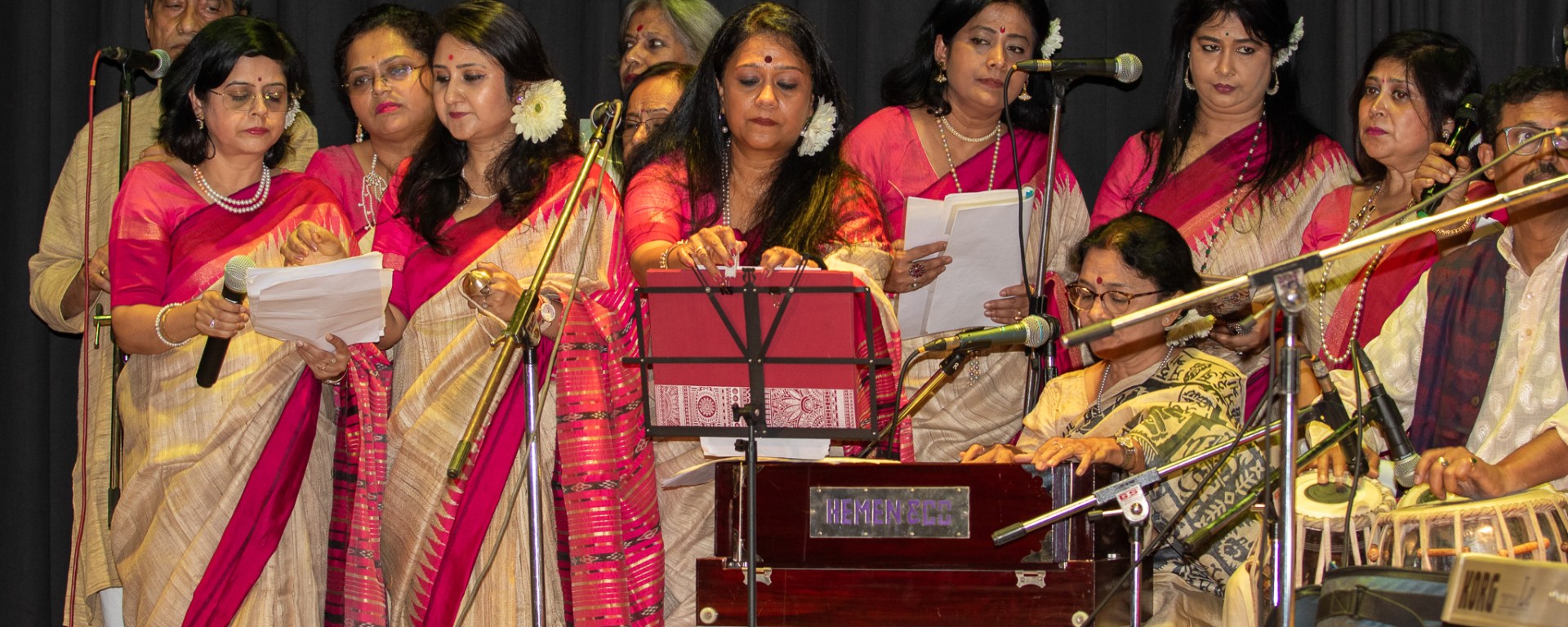
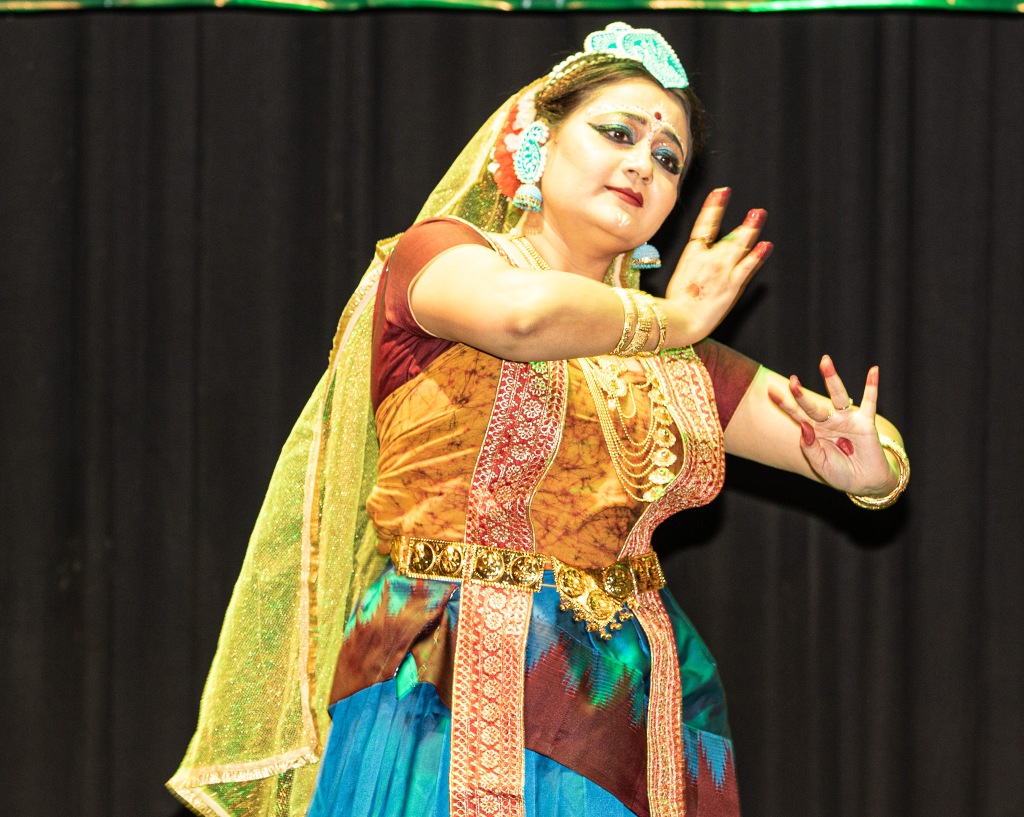
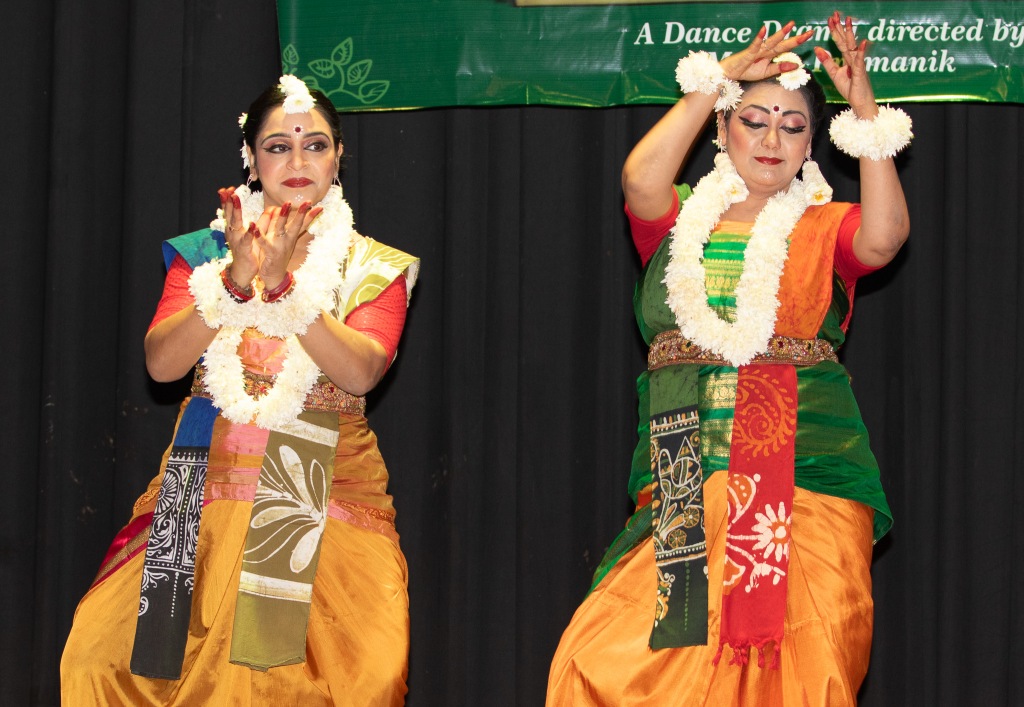
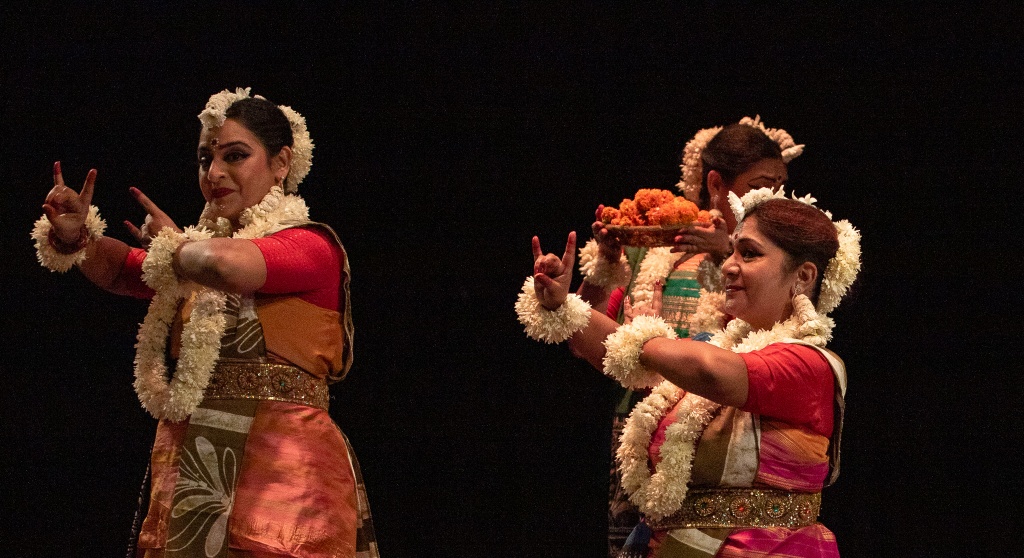
A few weeks ago the Tagore aficionados and culture vultures residing within a reasonable diameter of the national capital New Delhi were treated to a highly colourful, delightful live presentation of the aforementioned magnum opus by Tagore. It was staged at south Delhi’s popular Bipin Chandra Pal auditorium by a Gurugram-based choir group Anandhara (lit: flow of eternal bliss).
At its helm was Mahua Pramanik a veteran Tagore music vocalist and former All India Radio artist. The dozen or so artists in the choir sang lustily with full vigour and vitality. Their voices rose and dipped in unison as the divine love tale unfolded.
Some of the outstanding renditions included “Marana Re, Tuhu Mama Shyama saman” wherein unable to bear her agony any longer a broken-hearted Radha piteously invokes ‘Death’ (personified as Krishna) to embrace her so that she can give up her life in sheer ecstasy. Another piece with delightful cadence was “Sawana Gagane Ghor Ghanaghata’’ narrating how Radha feels a tad diffident about venturing out on a dark stormy night for an abhisar (rendezvous/tryst) with her dark lord.

Yet another highly popular ditty was “Bhara Bhadara Maha Bhadara Shunya Mandir Mor.” Interestingly, in this one Tagore mentions the composer’s name as Vidyapati– who was one of the renowned ancient Vaishnava poets – rather than his nom de plume Bhanu Singha. Here, the protagonist Vidyapati laments how at the peak of monsoon season – an idyllic backdrop for romance and togetherness – the shrine within the depths of his soul stands empty. The Lord’s (read lover) advent is eagerly awaited.
All said and done, it was an enthralling musical evening and on my way home, the poet Wordsworth’s oft-quoted lines came to my mind:
“… the music in my heart I bore, long after it was heard no more”
Photo Credit : Ritobroto Pramanik
 COUNTRY SQUIRE INDIA